Last Updated on September 23, 2026
What Do Temporary Veneers Look Like Before the Final Ceramic Result?
Temporary veneers are custom-designed restorations placed the same day as tooth preparation, giving patients a fully transformed smile while the permanent ceramics are being fabricated. They are built from pre-treatment planning, look remarkably close to the final result, and allow the dentist to refine every detail before the permanent restorations are made.
One of the most common surprises in a smile makeover is how good the temporary stage already looks. Patients expect a rough placeholder. What they actually leave with on the day of preparation is a completely designed, wearable smile, built from detailed planning done before a single tooth was touched. This article explains what temporaries are, why they matter clinically, and how they fit into the overall smile makeover process. Understanding this stage changes how most patients think about the timeline and the result.
Before the full explanation, here are the key points:
- Temporaries are not placeholders. They are custom-built from pre-treatment planning and give patients a functional, aesthetic smile the same day teeth are prepared.
- The dentist uses scans and photos taken of the temporaries to dial in the permanent ceramic restorations, making the final result even more refined than what the patient sees at the temporary stage.
- For patients with grinding habits, temporaries also serve a protective role, covering prepared teeth while the permanent ceramics are being fabricated.
Ready To Get Started?
Request your appointment at Riverview Dental Art. Discover complete health dentistry!
Call 813.358.4117Request AppointmentWhat Are Temporary Veneers and Why Are They Part of the Process?
Temporary veneers are custom restorations placed on the prepared teeth immediately after the preparation appointment. They protect the teeth, allow the patient to experience the proposed smile design in real life, and give the dentist critical visual and dimensional information to refine before the permanent ceramic restorations are fabricated.
A lot of patients come in expecting the temporary stage to be, well, temporary in every sense. Something basic to tide them over. That’s not really how it works, at least not in a well-planned case.
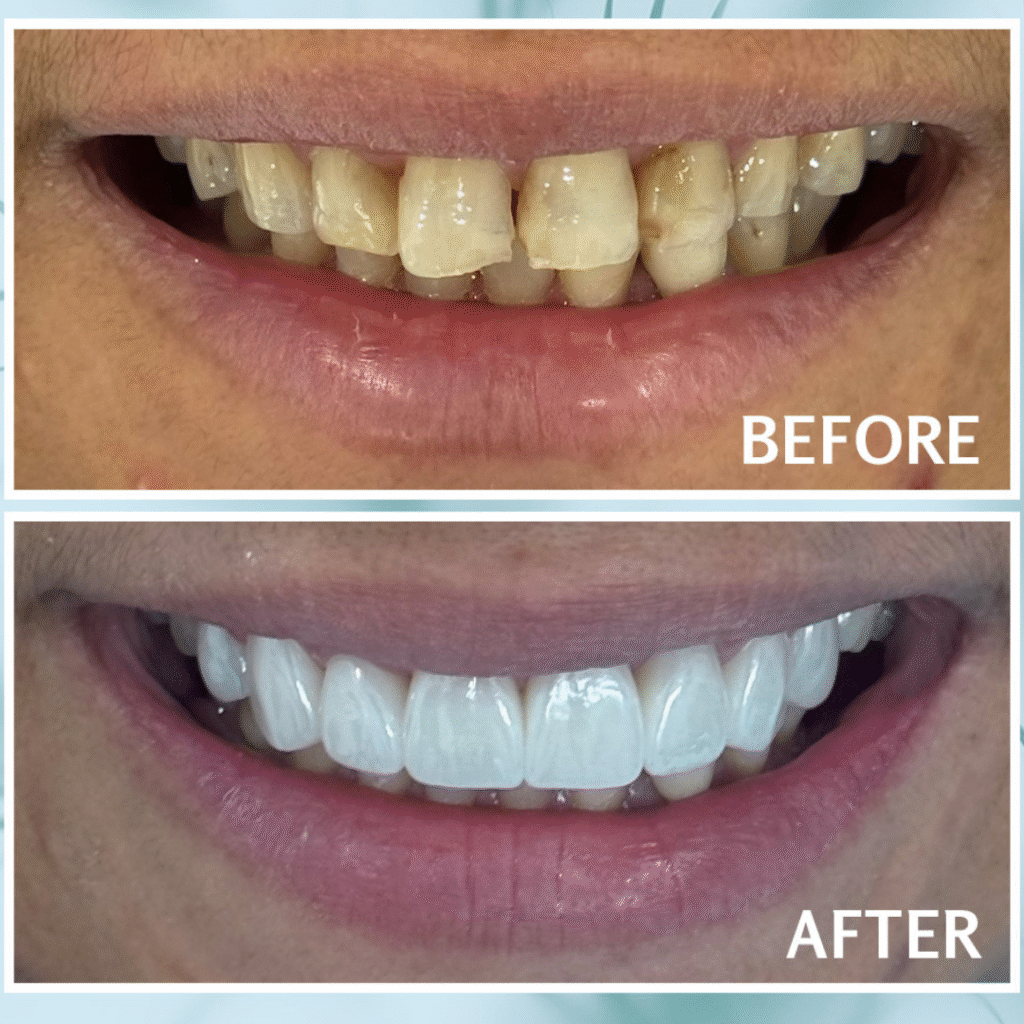
The temporaries are built before the appointment even begins, based on a preliminary planning process that maps out the shape, length, proportion, and design of the new smile. When the preparation is done and the temporaries are placed, the patient isn’t wearing a rough sketch. They’re wearing a close approximation of the final result. The shape is designed. The length is considered. The overall smile is fully present.
“That is actually the patient’s temporaries,” as Dr. Espino explains when showing a case that already looks like a finished smile. That framing matters. The transformation visible at the temporary stage is real. It’s intentional. It came from planning, not from luck.
What Does the Temporaries Stage Reveal That Scanning Alone Cannot?
Wearing temporaries allows both the patient and the dentist to evaluate the smile design in actual use, including how the teeth look when speaking, smiling at different angles, and in natural light. This real-world feedback is used to refine the final ceramic restorations in ways that digital scans alone cannot fully capture.
Digital scanning and photography are important parts of smile planning. But there’s a dimension of a smile that only shows up when the patient is actually wearing it. How the teeth look when someone laughs. How they sit when the face is relaxed. Whether the length feels right when talking. These are things you can approximate in design but only really evaluate in person, with the provisional restorations in place.
After temporaries are placed, Dr. Espino takes detailed scans and photos of the result. Those records become the reference point for fabricating the permanent ceramics. Every refinement, every adjustment that would make the final result even more precise, gets captured at that stage and carried forward into the permanent fabrication. It’s a feedback loop built into the process. The temporaries are not just a waiting stage. They’re a design refinement stage.
How Does Grinding Damage Teeth, and Why Does It Complicate a Smile Makeover?
Chronic grinding (bruxism) causes teeth to break, chip, and wear down over time. Broken teeth develop rough, porous surfaces that absorb stains, causing discoloration that compounds the structural damage. A smile makeover for a grinding patient requires addressing both the cosmetic result and the functional factors that caused the original damage.
The case shown in the video is a clear example of how grinding creates a layered problem. The patient came in with a severe grinding habit. That habit led to broken teeth. And the broken teeth, with their roughened, compromised surfaces, picked up stains over time. So by the time of the consultation, the patient was dealing with both significant structural damage and visible discoloration. One caused the other.
This is why the treatment planning for a grinding patient has to consider more than aesthetics. The grinding habit itself needs to be factored into the case. Once the new restorations are in place, protecting them from the same forces that damaged the original teeth is part of the long-term plan. That typically means a nightguard, which distributes bite force and prevents the new ceramics from experiencing the same wear pattern that shortened and broke the natural teeth.
Understanding why the damage happened makes the treatment make more sense. It’s not just about making things look better. It’s about rebuilding correctly and protecting the result once it’s there.
What Is the Same-Day Smile Transformation Experience Actually Like?
On the preparation appointment day, patients arrive with their existing teeth, have them prepared and temporaries placed in the same visit, and leave with a fully transformed smile. The entire same-day result is built from planning completed before the appointment began. The final ceramic restorations refine and finalize that result in a subsequent visit.
This is one of the parts of the process that patients find most surprising, and it’s worth describing clearly so expectations are set correctly from the start.
The patient in the video walked in with broken, stained teeth and walked out the same day with a complete smile transformation. What they were wearing at that point were the temporaries, built from Dr. Espino’s preliminary planning. The permanent ceramics hadn’t been fabricated yet. But the patient left that day with a smile that was already dramatically different from what they came in with.
That same-day result happens because the design work is done upfront. The shape of the new smile, the length of the teeth, the proportions, all of it is mapped out in the planning phase before the preparation appointment. When the patient sits down, the destination is already defined. The preparation and temporary placement execute a plan that already exists.
The follow-up appointment, when the permanent ceramic restorations are delivered, takes that result and refines it with the precision of the final material. The permanent ceramics are more detailed, more polished, and more precisely matched to the design than the temporaries. But the transformation itself is already visible from day one.
What Is the Difference Between Temporaries and the Final Ceramic Restorations?
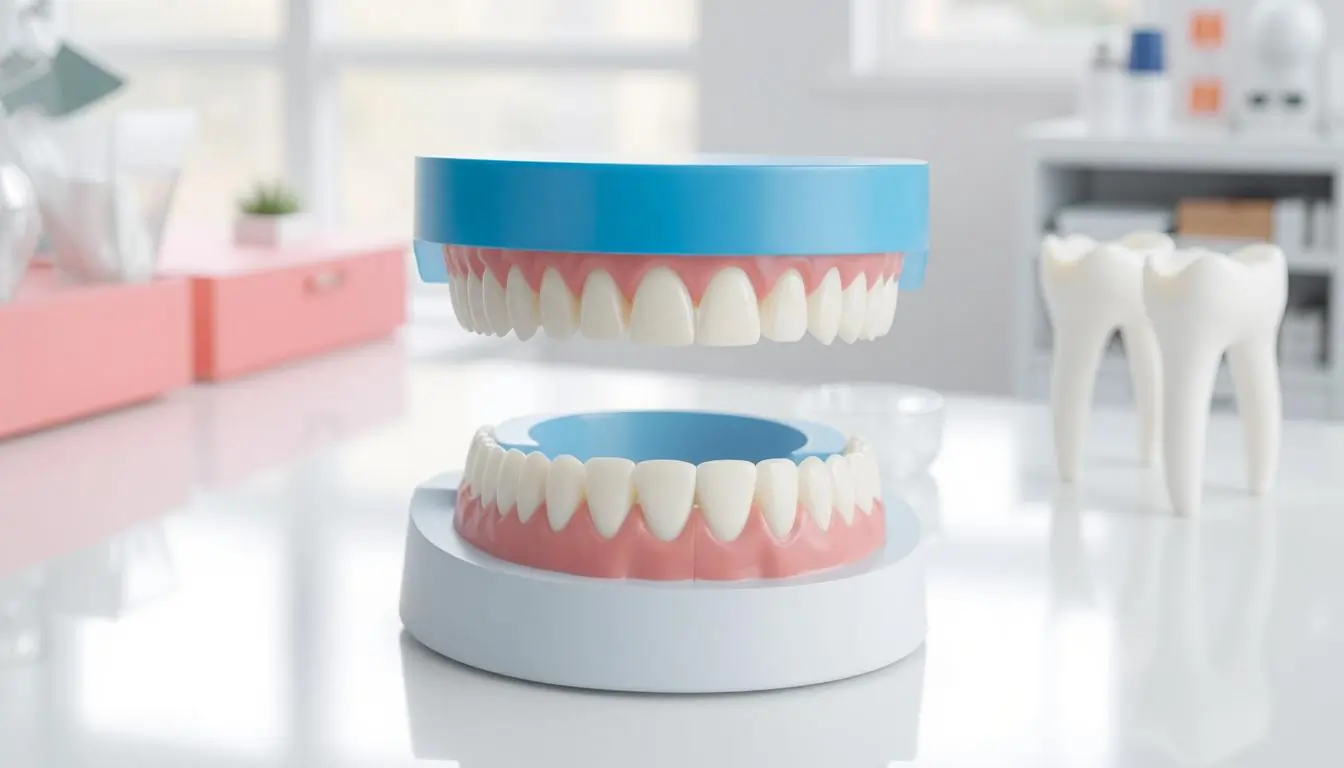
Temporary veneers are made from a provisional material designed for short-term wear during the fabrication period. The final ceramic restorations, either ceramic veneers or ceramic crowns, are fabricated from high-strength dental porcelain with greater precision, durability, and refined aesthetics. The final result improves on the temporaries in detail, longevity, and surface finish.
Ceramic veneers are thin porcelain shells bonded to the front surface of natural teeth to restore or improve their shape, size, and color. Ceramic crowns are full-coverage porcelain restorations that cap the entire visible tooth, used when greater structural correction or protection is required, such as in cases with extensive grinding damage or broken tooth structure.
For a grinding patient with broken teeth, the case may include a combination of both. Teeth with less damage might be restored with veneers. Teeth that are more structurally compromised, where the extent of the break or wear requires full coverage, are better suited to crowns. That determination is made tooth by tooth during the evaluation, not as a one-size-fits-all decision.
The final ceramics are fabricated in-house at our Riverview practice. All restorations are milled and designed in-house, which means the communication between Dr. Espino and the fabrication process is direct. There’s no translation loss between the scans and photos taken of the temporaries and the instructions used to fabricate the permanent restorations.
Who Is a Good Candidate for This Type of Smile Makeover?
Patients with grinding-related tooth damage, broken or chipped teeth, discoloration caused by surface wear or staining on compromised enamel, or a combination of structural and cosmetic concerns are strong candidates for a same-day temporaries approach. A clinical evaluation confirming the scope of damage and confirming dental health is the starting point for every case.
The case in the video represents a pattern Dr. Espino sees regularly. Years of grinding. Breaking that starts gradually and becomes more visible over time. Staining that builds on the roughened surfaces of broken teeth. By the time the patient comes in, the smile has changed significantly from what it once looked like, and not in a single dramatic event but through accumulated damage.
If any of the following sound familiar, it’s worth having a proper evaluation:
- Teeth that have chipped, cracked, or broken, particularly the front teeth
- Discoloration concentrated on teeth that have been damaged or worn down
- A grinding habit, whether you’re aware of it or have been told about it
- A smile that looks noticeably shorter or more worn than it did years ago
- Previous cosmetic work that has failed, chipped, or looks unnatural
General dental health is always assessed before cosmetic treatment begins. Any active decay, gum issues, or structural concerns that need to be resolved first will be identified during the evaluation and planned accordingly.
How Much Does a Smile Makeover Like This Cost in Tampa Bay?
At Riverview Dental Arts, ceramic veneers and crowns are $500 per tooth with a minimum of six teeth treated. For a grinding patient requiring both cosmetic and structural restoration, the total case cost depends on how many teeth need treatment and whether each tooth is best restored with a ceramic veneer or a ceramic crown.
| Treatment Scope | Teeth | Riverview Dental Arts | Tampa Bay Average |
| Minimum case | 6 | $2,995 | $7,200, $12,000 |
| Front eight teeth | 8 | $4,000 | $9,600, $16,000 |
| Upper arch | 10 | $5,000 | $12,000, $20,000 |
| Full aesthetic zone | 16 | $8,000 | Up to $20,000+ |
| Consultation | , | Free | $75, $200+ |
Pricing is below Tampa Bay market rates because all restorations are designed and fabricated in-house. There are no external lab fees and no third-party markup built into the treatment cost. The practice is in-network with most PPO insurance plans, and the team handles benefit verification and claim filing on behalf of patients. For cases involving crowns on teeth with documented structural damage, partial insurance coverage may apply depending on the patient’s plan. See the financing options page for current payment plan details.
What determines the final cost of a grinding-related smile makeover?
- Number of teeth treated: At $500 per tooth, total cost scales directly with how many teeth require restoration. A focused front-teeth case starts at $2,995 for six teeth. A full aesthetic zone treatment covering sixteen teeth totals $8,000.
- Veneers versus crowns: Teeth with surface-level wear and largely intact structure are typically restored with ceramic veneers. Teeth with significant breaking, large existing restorations, or extensive structural compromise are better suited to ceramic crowns, which provide full coverage and greater support.
- Case complexity: Grinding cases often involve bite evaluation in addition to cosmetic design. Where bite correction, gum contouring, or multi-arch treatment is needed, that adds clinical scope and affects the total case plan.
- Prior restorative treatment needed: If active decay or structural damage beyond surface wear needs to be addressed before cosmetic work begins, those procedures are planned and quoted separately from the cosmetic phase and may qualify for insurance coverage.
- Individual treatment goals: Some patients want to focus on the most visibly damaged teeth. Others want a complete upper and lower smile transformation. The final scope is always determined by the clinical evaluation and the patient’s own priorities together.
Is Now the Right Time to Find Out What Your Case Would Involve?
If you have broken, worn, or stained teeth from grinding and you’ve been thinking about doing something about it, the most useful step is a proper evaluation. Not a commitment to treatment. Just a clear picture of what your specific case would involve, what the scope looks like, what the result could be, and what the process from preparation to final ceramics would actually feel like.
The same-day temporaries experience is one of the most reassuring parts of this kind of case for patients who have been anxious about the process. You don’t leave with prepared teeth waiting weeks to see what happens. You leave that day with a completely transformed smile, already close to the final result, already a dramatic change from what you came in with.
If you’re also curious about cosmetic treatment, free consultations are available. You can also browse th esmile makeover page for an overview of cosmetic services. When you’re ready to schedule your free consultation here. Browse the before and after gallery to see how vertical dimension cases look before and after treatment.
What do temporary veneers look like and how long do you wear them?
Temporary veneers are custom-built provisional restorations placed the same day teeth are prepared. They closely reflect the planned final smile design and look significantly better than most patients expect. The temporary phase typically lasts a few weeks while the permanent ceramic restorations are being fabricated. During that time the patient wears a fully functional, aesthetically designed smile before the final result is delivered.
Can grinding damage be fully corrected with veneers and crowns?
Yes, in most cases. Ceramic veneers and crowns can rebuild broken, chipped, and worn teeth to their natural shape and proportion while also correcting discoloration from staining on compromised surfaces. The restorations address both the cosmetic result and the structural damage grinding caused. Long-term protection of the new restorations requires managing the grinding habit, typically with a custom nightguard, to prevent the same damage from recurring.
Is the same-day smile transformation the final result?
Not quite, though it’s close. The same-day result is the temporary stage, built from pre-treatment planning and placed immediately after tooth preparation. It represents the proposed smile design but is made from a provisional material. The permanent ceramic restorations are fabricated afterward using scans and photos taken of the temporaries, and they refine and finalize the result with greater precision, polish, and durability than the temporaries.
How are the permanent ceramics made to match the temporaries so closely?
After the temporaries are placed, the dentist takes detailed digital scans and photographs of the result. These records capture the shape, length, proportion, and overall design as the patient is actually wearing it. That information is used to fabricate the permanent ceramics to match and improve upon what the patient approved at the temporary stage. Because the restorations are designed and fabricated in-house, the communication between the clinical evaluation and the fabrication process is direct and precise.
At a Glance
- Who is a good candidate for a same-day temporaries smile makeover? Patients with broken, chipped, or worn teeth from grinding, discoloration on damaged tooth surfaces, or a combination of structural and cosmetic concerns are strong candidates. Dental health must be confirmed before treatment begins: active decay or gum issues are addressed first. Once a healthy foundation is established, most grinding-related smile cases can be fully rebuilt with ceramic veneers and crowns.
- How long does the full process take from consultation to final ceramics? Most cases proceed in two main appointments. The preparation and temporaries appointment takes place first, with the patient leaving the same day with a transformed smile. The permanent ceramic restorations are delivered in a follow-up appointment typically a few weeks later once fabrication is complete. Cases requiring prior restorative treatment may extend the overall timeline before the cosmetic phase begins.
- How many veneers or crowns are typically needed for a grinding case? The number depends on how many teeth show damage and how extensive that damage is. Most cases involve a minimum of six restorations covering the front visible smile zone. Cases with more widespread grinding damage, particularly where both upper and lower front teeth are affected, may involve ten to sixteen restorations to fully rebuild the smile and restore proper bite relationships.
- How long do ceramic veneers and crowns last after a grinding case is rebuilt? Ceramic veneers and crowns typically last ten to fifteen years or longer with proper care. For grinding patients, longevity depends heavily on whether the grinding habit is managed with a nightguard after treatment. Without protection, new restorations are exposed to the same forces that damaged the original teeth. With a nightguard and regular dental care, the rebuilt smile is a durable long-term result.
- What advantages does a same-day temporaries approach have compared to waiting for the final ceramics? The same-day temporaries approach means patients never have a gap in their smile between preparation and final delivery. They leave with a complete, designed smile on the day of their preparation appointment. The temporary phase also gives the dentist real-world visual feedback to refine the permanent ceramics before they are fabricated, making the final result more precise than what digital planning alone could produce.