
Last Updated on September 23, 2026
What Can Stop You From Getting a Smile Makeover? A Dentist Explains
Active gum disease, severe decay, and missing teeth can all prevent or significantly change how a smile makeover is approached. These are not reasons to give up on the result you want. They are foundation issues that need to be resolved first so that any cosmetic work placed on top of them can actually last.
This is one of the most practical questions a patient can ask before booking a cosmetic consultation, and it doesn’t get covered often enough. Most of the content about smile makeovers focuses on the result. Not enough of it talks about what has to come first. Whether your smile is ready for veneers right now depends on the foundation underneath them, and that foundation is something a clinical evaluation has to confirm before cosmetic treatment can begin.
The short version, before the full explanation:
- Gum disease and severe decay are the most common foundation problems that have to be treated before any cosmetic work can start.
- Missing teeth change the plan entirely. Bridges or implants may need to come first so the cosmetic result has proper structural support.
- These are not disqualifiers. They are sequencing issues. Most patients can still get the smile they want, just with a clear order of steps to get there.
Ready To Get Started?
Request your appointment at Riverview Dental Art. Discover complete health dentistry!
Call 813.358.4117Request AppointmentWhy Does the Foundation Matter Before Veneers or Crowns?
Placing ceramic veneers or crowns over unhealthy teeth, whether affected by active gum disease, untreated decay, or significant structural failure, compromises both the longevity of the restorations and the underlying dental health. The foundation has to be stable before cosmetic work is placed on top of it.
Think about it the way you’d think about any structural project. You don’t put a new surface over a damaged foundation and expect it to hold. The same logic applies in dentistry.
Ceramic veneers are thin porcelain shells bonded to the front surface of natural teeth to improve their shape, color, and proportion. Ceramic crowns are full-coverage porcelain restorations that cap the entire visible portion of a tooth, used when greater structural protection or correction is required. Both types of restoration depend on the underlying tooth and surrounding gum tissue being healthy and stable at the time of placement.
If that foundation isn’t there, the cosmetic result isn’t going to last. And placing expensive, beautifully made restorations over an unhealthy base isn’t something a responsible dentist should do. The goal is a result that lasts years, not months. Getting to that result sometimes means addressing what’s underneath first.
How Does Gum Disease Affect Smile Makeover Candidacy?
Active gum disease causes inflammation, tissue loss, and bone changes that make it impossible to predictably place and maintain cosmetic restorations. Gum disease must be treated and stabilized before veneer or crown preparation begins, because placing restorations in an actively diseased environment leads to compromised results and ongoing problems.
Gum disease is one of the two most common foundation issues Dr. Espino identifies before a cosmetic case can move forward. A lot of patients don’t realize they have it, or they’re aware of some bleeding and tenderness but haven’t connected it to whether they’re ready for cosmetic work.
The tissue around the teeth shapes the entire visual result of a smile makeover. Healthy gum margins, proper tissue contour, the way gum sits against each tooth, all of that contributes to how the final restorations look. If the tissue is inflamed or receding, the cosmetic result is unpredictable and unstable from day one. Treating gum disease first isn’t a detour from the smile makeover plan. It’s part of the plan. Once the gums are healthy, the cosmetic phase proceeds on a stable, predictable foundation.
What About Severe Decay? Does That Disqualify a Patient?
Severe decay that compromises tooth structure does not automatically disqualify a patient from a smile makeover, but it must be treated before cosmetic restorations are placed. In some cases, decay treatment and cosmetic restoration are planned together as a combined case. In others, restorative work must be completed first before the cosmetic phase can begin.
Decay is the second major foundation problem. And it exists on a spectrum. A small amount of surface decay on a tooth that otherwise has good structure is very different from a tooth where significant decay has undermined the root or internal structure.
Where a tooth has workable structure remaining, Dr. Espino can often incorporate the decay treatment into the overall cosmetic plan. Treating the decay and restoring the tooth with a ceramic crown addresses both the health issue and the cosmetic result in a single planned approach. Where decay has progressed to a point where the tooth cannot support a restoration at all, extraction and replacement planning may need to come before cosmetic work on the adjacent teeth proceeds.
The point isn’t that decay ends the conversation. It’s that decay changes the sequence. The evaluation is where that gets sorted out.
How Do Missing Teeth Change the Approach to a Smile Makeover?
Missing teeth affect spacing, bite, and the overall structural balance of the smile. Depending on where the missing teeth are and how many there are, bridges or dental implants may need to be placed before veneers or crowns can be designed for the remaining teeth. The presence of gaps changes both the cosmetic plan and the sequence of treatment.
This is one that surprises some patients. They come in wanting veneers on their visible front teeth and don’t think of a missing tooth elsewhere in the arch as relevant to that goal. But it is.
Missing teeth create shifts. Over time, neighboring and opposing teeth move into the space. That changes how the bite comes together, and it changes the spacing and positioning of the teeth that are still present. Designing a smile makeover without accounting for those missing teeth produces a result that either won’t look right or won’t be stable long-term.
In cases like these, the path forward typically involves replacing the missing teeth first, either with a dental bridge, which spans the gap using adjacent teeth as support, or with dental implants, which replace the root and crown of the missing tooth independently. Once those replacements are in place, the cosmetic work on the surrounding teeth can be designed with proper structural support and correct spacing. The smile makeover still happens. It just has a necessary first chapter.
What Is the Difference Between a Dental Bridge and a Dental Implant for Smile Makeover Preparation?
A dental bridge replaces a missing tooth by anchoring a prosthetic tooth to the natural teeth on either side of the gap. A dental implant replaces the missing tooth independently by surgically placing a titanium post into the jawbone, which then supports a ceramic crown. Implants preserve adjacent tooth structure, bridges involve preparing the neighboring teeth. The right choice depends on the number of missing teeth, bone availability, and the overall cosmetic plan.
Both are legitimate paths to replacing missing teeth before a smile makeover. The decision between them depends on several clinical factors: how many teeth are missing, whether there’s adequate bone in the jaw to support an implant, how the neighboring teeth look and whether they’d benefit from crowns as part of the cosmetic plan anyway, and the patient’s timeline.
Implants are generally the preferred long-term solution because they don’t require modifying adjacent teeth and they preserve the bone in the area of the missing tooth. But implant placement involves a healing period before the final crown is placed, which extends the overall timeline. A bridge can sometimes be placed more quickly and may make sense in cases where the neighboring teeth are already planned for crowns as part of the cosmetic work.
These are exactly the kinds of decisions that get sorted out during the evaluation, not before it. There’s no universal right answer. It depends on the specific case.
How Much Does Foundation Treatment Add to the Overall Cost?
At Riverview Dental Arts, the cosmetic phase of a smile makeover, ceramic veneers and crowns, is $500 per tooth with a minimum of six teeth treated. Foundation treatment costs, including gum disease therapy, decay treatment, or implant placement, are planned and quoted separately based on what each patient’s case requires. Partial insurance coverage may apply to restorative and periodontal procedures.
| Treatment Component | Typical Timing | Insurance Coverage? | Notes |
| Gum disease treatment | Before cosmetic phase | Often partially covered by PPO | Must be stabilized before veneer prep |
| Decay treatment / restorative | Before or combined with cosmetic | Often partially covered | Crown may serve both purposes |
| Dental implant placement | Weeks to months before cosmetic | Varies by plan | Healing period required before crown |
| Dental bridge | Before cosmetic phase | Often partially covered | Faster than implant timeline |
| Cosmetic veneers and crowns | After foundation is established | Generally not covered | $500 per tooth, min. 6 teeth at $2,995 |
The practice is in-network with most PPO insurance plans, and the team handles benefit verification and claim filing on behalf of patients. This matters because the restorative and periodontal work that often precedes a smile makeover is frequently covered, at least partially, in a way that purely cosmetic veneers are not. Understanding what your plan covers before treatment begins is part of how our office approaches treatment planning.
What determines the total cost when foundation treatment is needed before a smile makeover?
- Type of foundation issue: Gum disease therapy, decay treatment, and implant placement each carry separate fees determined by the scope of treatment needed in each patient’s case.
- Number of teeth involved in cosmetic work: At $500 per tooth, the cosmetic phase scales with how many teeth are within the visible smile zone. Cases start at $2,995 for six teeth.
- Veneers versus crowns in the cosmetic plan: Teeth requiring more structural correction or full-coverage restoration are treated with crowns, teeth with largely intact structure receive veneers. The mix is determined at evaluation.
- Insurance offset on restorative components: Foundation treatment, gum therapy, decay treatment, and bridges or implants may qualify for partial PPO coverage, reducing the out-of-pocket portion of those phases.
- Timeline and phasing of treatment: Cases requiring implants before cosmetic work involve a longer overall treatment window and multiple appointments across phases. That affects planning but not the total cosmetic fee itself.
What Happens at the Consultation, and Is It Worth Going Before You Know If You’re Ready?
Yes. That’s actually the whole point of the consultation.
Patients sometimes hold off on booking an evaluation because they suspect they might have gum issues, or a missing tooth, or they haven’t been to the dentist in a while and they’re not sure what they’ll find. The consultation is exactly where all of that gets assessed. You don’t need to know in advance whether you’re ready. The evaluation tells you.
What comes out of a consultation with Dr. Espino is a clear picture of where your dental health stands, what foundation work needs to happen if any, and what the full path to your smile makeover looks like, with realistic sequencing and cost information for each phase. There are no surprises after treatment starts.
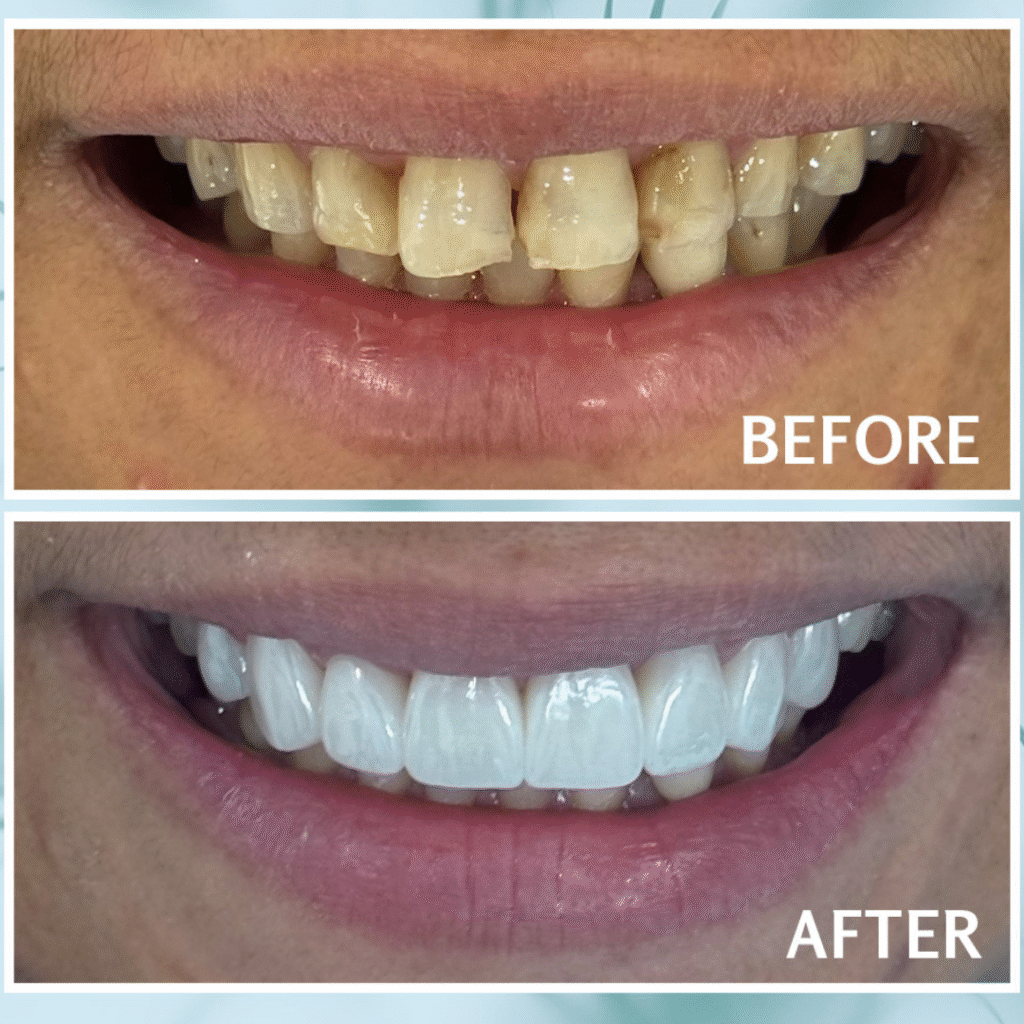
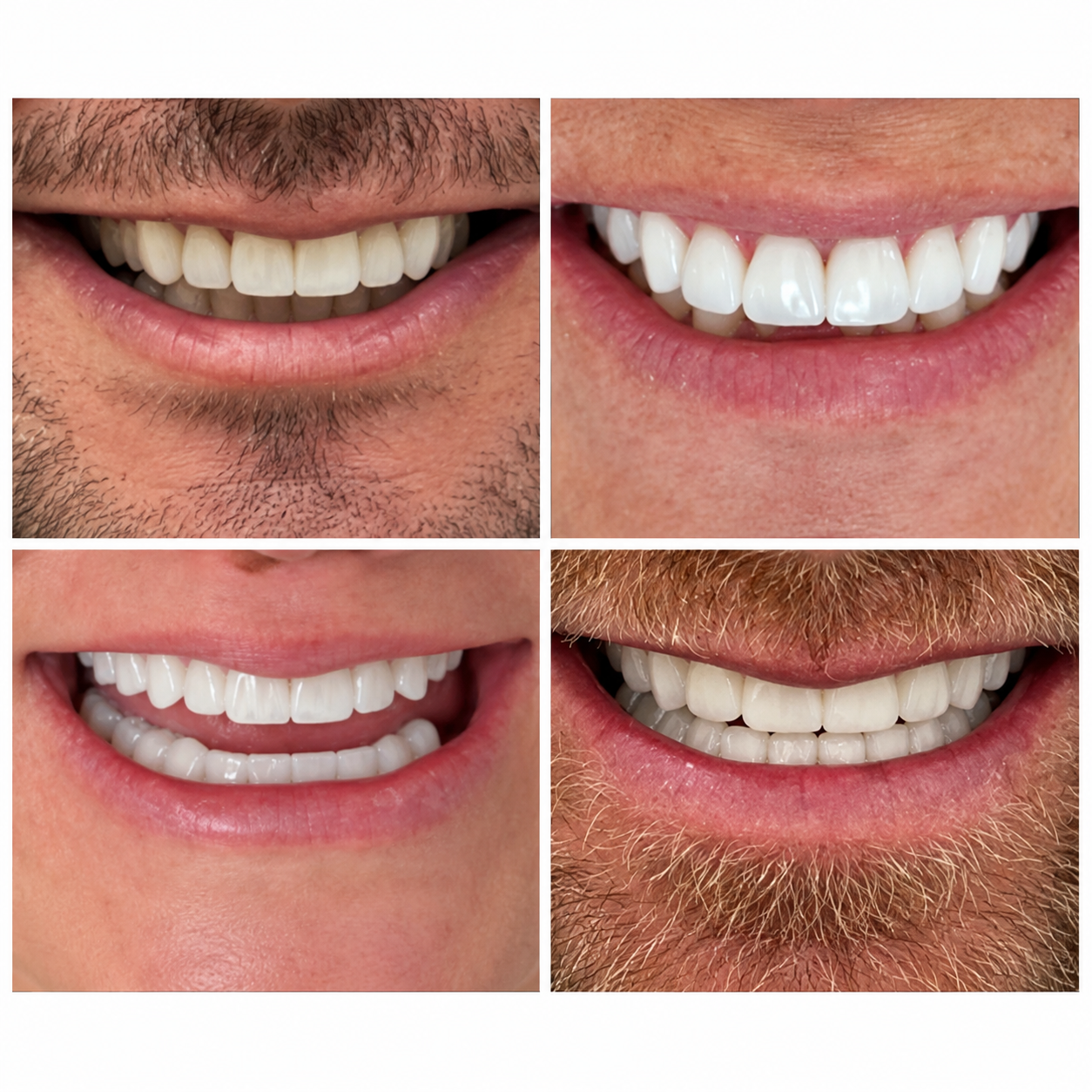
Patients from across Tampa Bay, including Riverview, Brandon, Valrico, and Apollo Beach, are welcome. The smile makeover overview page covers what the process looks like from first visit through final ceramics. See the before and after gallery for real patient cases at different starting points, including complex cases that required foundation work before the cosmetic phase. When you’re ready to find out where you stand, schedule your free consultation here.
If you’re also curious about cosmetic treatment, free consultations are available. You can also browse th esmile makeover page for an overview of cosmetic services. Browse the before and after gallery to see how vertical dimension cases look before and after treatment.
Frequently Asked Questions
Can you get veneers if you have gum disease?
Not while the gum disease is active. Gum disease has to be treated and the tissue stabilized before ceramic veneers or crowns can be placed. Placing restorations on teeth surrounded by diseased, inflamed tissue leads to unpredictable results and increases the risk of the restorations failing prematurely. The good news is that gum disease treatment is often a manageable process, and once the tissue is healthy, cosmetic work can proceed on a solid foundation.
Do you need dental implants before a smile makeover?
It depends on whether missing teeth affect the spacing, bite, or structural balance of the smile. In many cases, yes: missing teeth should be replaced with implants or a bridge before cosmetic veneers or crowns are placed on the remaining teeth. Skipping that step means designing a cosmetic result around an unstable structural situation, which affects both how the final smile looks and how long it lasts.
How long does foundation treatment take before a smile makeover can start?
It depends on what’s needed. Gum disease treatment typically takes several weeks to complete and stabilize before a cosmetic evaluation can be finalized. Implant placement requires a healing and integration period of several months before the final crown is placed. Decay treatment can often be completed in one or two appointments. The consultation is where a realistic timeline, accounting for any foundation work that’s needed, gets mapped out for each individual case.
What if I have both decay and missing teeth? Can I still get a smile makeover?
In most cases, yes. Multiple foundation issues mean the treatment has more phases and a longer overall timeline, but they don’t prevent the end result. The evaluation determines what needs to happen in what order, and the cosmetic planning happens alongside that sequencing so you have a clear picture of the full path from current state to final smile. Most patients with complex starting points can still get to the result they want with proper planning.
At a Glance
- Who is a good candidate for a smile makeover right now? Patients with healthy gums, no active decay, and no significant missing teeth that would affect smile structure are typically ready to begin cosmetic treatment immediately. Patients with foundation issues, including gum disease, untreated decay, or missing teeth, are candidates for a smile makeover after those issues are resolved. The free consultation is the right place to find out which category applies to your case.
- How long does treatment take when foundation work is needed first? Timeline varies by what’s required. Gum disease treatment takes several weeks to complete and stabilize. Dental implants require a healing period of several months before the final crown is placed. Decay treatment can often be completed in one to two appointments. Once the foundation is established, the cosmetic phase, preparation, temporaries, and final ceramic delivery, typically takes two main appointments over a few weeks.
- How many veneers or crowns are typically included in a smile makeover? Most smile makeover cases at Riverview Dental Arts involve a minimum of six restorations covering the front visible smile zone. Cases with more widespread concerns, or where missing teeth have been replaced with implants or bridges that also fall within the aesthetic zone, may involve ten to sixteen restorations for a complete upper and lower transformation. The number is determined at the clinical evaluation based on the patient’s smile design goals.
- How long do ceramic veneers and crowns last after a smile makeover? Ceramic veneers and crowns typically last ten to fifteen years or longer with proper oral hygiene and regular dental care. Longevity depends significantly on whether the foundation was healthy at the time of placement. Restorations placed on a properly treated, stable foundation consistently outlast those placed on compromised tissue or bone. Patients with grinding habits should wear a nightguard to protect the restorations long-term.
- What advantages do veneers have compared to braces when teeth are also discolored or broken? Veneers address alignment, proportion, color, and structural damage simultaneously in a single cosmetic phase. Braces can reposition teeth but cannot change their color, repair chips or breaks, or close gaps in the same visual way that restorations do. For patients whose concern is both alignment and appearance, a smile makeover with ceramic veneers or crowns often produces a more complete transformation in a shorter overall timeline than orthodontics alone.