
Last Updated on September 23, 2026
Are There Any Side Effects From a Smile Makeover? What Patients Need to Know in Tampa Bay
Honestly, for most patients thinking about veneers or ceramic crowns, this is one of the first questions that comes up. And it makes sense. You’re covering healthy teeth with ceramic restorations. It feels like there should be a catch. The short answer is: when a smile makeover is done correctly, there really aren’t side effects. In many cases, the treatment actually improves the patient’s overall dental health, not just their appearance.
A properly planned smile makeover using ceramic veneers or crowns carries no significant side effects when placed on teeth that have been fully evaluated and treated first. In many cases, patients actually experience better gum health and reduced plaque buildup as a result of improved tooth shape and contact points.
Key takeaways before we go further:
- Ceramic restorations are only placed on healthy teeth. Any underlying issues are resolved first.
- Improved tooth shape and contact between teeth can reduce food impaction and bacterial buildup.
- A well-executed smile makeover is a health improvement, not a health risk.
Ready To Get Started?
Request your appointment at Riverview Dental Art. Discover complete health dentistry!
Call 813.358.4117Request AppointmentWhy Do Patients Worry About Side Effects?
Answer: Most concerns about smile makeover side effects come from a misunderstanding of what the procedure involves. When treatment is properly sequenced, starting with a full health evaluation and resolving any existing issues before cosmetic work begins, there is nothing about placing ceramic on teeth that introduces new health problems.
A lot of patients come in having read something online, or having heard from a friend, that veneers “damage” teeth. And it’s worth addressing that directly.
Ceramic veneers are thin porcelain shells bonded to the front surface of natural teeth to improve their shape, size, and color. Ceramic crowns are full-coverage restorations that cap the entire visible tooth, typically used when more structural correction is needed. Both are biocompatible, durable options, and when designed well, they actually improve the functional relationship between teeth. The concern about damage usually comes from cases where treatment was rushed, or where health issues weren’t fully resolved before cosmetic work started. That’s a process problem, not an inherent problem with the treatment itself.
The standard approach here is simple: health first, cosmetics second. Every time.
Does a Smile Makeover Actually Improve Gum Health?
Answer: Yes, in many cases it does. When teeth have crowding, spacing, or poor contact points, food and plaque accumulate in those areas consistently. Ceramic restorations designed with proper tooth shape, size, and contact improve how teeth fit together, which reduces food impaction and makes daily cleaning significantly more effective.
This is the part that surprises most patients. They come in thinking cosmetic dentistry is purely about appearance, and they leave with better overall oral hygiene conditions than they had before.
Think about it this way. If two teeth don’t have a proper contact point between them, food is going to pack into that space every time you eat. No amount of flossing fully compensates for a structural problem. When a veneer or crown restores that contact to where it should be, the food impaction stops. The plaque that was accumulating in that area has nowhere to sit. The gum tissue in that zone responds by becoming healthier.
“In a lot of cases we’re making improvements on the patient’s health,” as Dr. Espino explains it. That’s not a selling point. It’s just the clinical reality of what happens when tooth form is corrected properly.
What Happens If There Are Existing Health Issues Before Treatment?
Answer: Any existing dental health issues, whether cavities, gum disease, bite problems, or old failing restorations, must be fully addressed before cosmetic work begins. Ceramic is placed only on healthy teeth. Attempting cosmetic treatment over unresolved health problems leads to poor outcomes and, in those cases, real side effects.
This is non-negotiable, and it’s worth understanding why. Placing a veneer over a tooth with an untreated cavity doesn’t fix the cavity. It seals it in. The decay continues underneath. That creates a much bigger problem than the original one.
The proper sequence is always the same: full evaluation, treat what needs to be treated, confirm health, then proceed with cosmetic planning. When that sequence is followed, the cosmetic phase is genuinely low-risk. When it’s skipped or rushed, that’s when problems occur.
Patients sometimes push back on this. They just want the cosmetic result as fast as possible. And it’s understandable. But the evaluation phase protects the investment. Restorations placed on a healthy foundation last significantly longer and perform better than those placed on a compromised one.
Are There Any Temporary Sensitivities After Placement?
Answer: Some patients notice mild temperature sensitivity in the days immediately following veneer or crown placement. This is common, temporary, and typically resolves within one to two weeks as the teeth adjust to the new restorations. It is not a side effect of the procedure itself, but a normal short-term response.
It depends on the individual patient and the specific teeth involved. Some patients notice nothing at all. Others feel mild sensitivity to cold or hot for a week or two. That’s within the normal range.
What it isn’t is a sign that something went wrong. The tooth is adjusting. The nerve inside is responding to changes in the surrounding structure. As long as the sensitivity is mild and fades over time, it’s not a clinical concern.
If sensitivity is significant, persistent beyond two weeks, or involves sharp pain rather than mild discomfort, that’s worth discussing with your dentist. In most cases, it points to something that was present before treatment and was either missed or not fully resolved during the health phase. That’s a process issue, and it’s correctable. But it reinforces the point: proper sequencing and thorough evaluation before cosmetic treatment makes everything downstream smoother.
Who Is Actually a Good Candidate for a Smile Makeover?
Answer: The ideal candidate is a patient with healthy teeth and gums, or whose dental health issues can be fully resolved before treatment, who has cosmetic concerns such as worn, chipped, discolored, misshapen, or unevenly spaced teeth that affect how their smile looks or functions.
Most people who ask about smile makeovers are good candidates. The evaluation is really about confirming that the foundation is solid before the cosmetic work begins.
Patients with active gum disease, significant bone loss, or untreated decay need to address those things first. Once they do, the path to cosmetic treatment is open. Dr. Espino and his team evaluate bite, gum balance, facial proportions, and the overall relationship between teeth before any treatment plan is finalized. With 15 or more years of experience in cosmetic dentistry, that planning phase is where the outcome is really determined.
If you’re not sure whether you’re a candidate, the most practical thing to do is come in for a consultation. You’ll know exactly what’s there and what the realistic options are.
How Much Does a Smile Makeover Cost, and What’s Included?
Answer: At Riverview Dental Arts, ceramic veneers and crowns are priced at $500 per tooth with a minimum of six teeth. The total cost depends on how many teeth are included in the aesthetic zone and whether upper teeth, lower teeth, or both are treated.
| Treatment Scope | Teeth | Riverview Dental Arts | Tampa Bay Average |
| Minimum case | 6 | $2,995 | $7,200–$12,000 |
| Front eight teeth | 8 | $4,000 | $9,600–$16,000 |
| Upper arch | 10 | $5,000 | $12,000–$20,000 |
| Full aesthetic zone | 16 | $8,000 | Up to $20,000+ |
| Consultation | – | Free | $75–$200+ |
The price is lower than the Tampa Bay average because every restoration is designed and fabricated in-house. No outside lab fees. No third-party markup. The quality of the ceramic is the same. The overhead structure is not.
What determines the final cost of a smile makeover?
- Number of teeth treated: At $500 per tooth, the total scales directly with how many teeth fall within the patient’s aesthetic zone. A six-tooth case costs $2,995. A sixteen-tooth full-arch case costs $8,000.
- Type of restoration needed: Ceramic veneers cover the front surface of the tooth and are used for primarily cosmetic corrections. Ceramic crowns cap the entire tooth and are used when more structural support or correction is required. Crowns are typically indicated for teeth with existing damage, larger restorations, or significant shape changes needed.
- Case complexity: Straightforward cosmetic cases with healthy underlying teeth are simpler to plan and execute. Cases requiring significant bite correction, gum recontouring, or treatment of multiple arches involve more clinical steps and affect the overall treatment scope.
- Additional restorative procedures: If health issues such as decay, failing old restorations, or gum problems need to be resolved before cosmetic work begins, those procedures are planned and priced separately from the cosmetic phase.
- Individual treatment goals: Some patients want to address only the upper front teeth. Others want a full upper and lower smile transformation. The scope is always determined by what the patient wants to achieve and what the clinical evaluation supports.
Should You Consider a Smile Makeover Consultation?
If you’ve been thinking about this for a while, whether because of crowding, spacing, worn edges, discoloration, or an overall smile you’ve never quite been happy with, the evaluation is the right starting point. Not a commitment to treatment. Just a clear, honest picture of what’s there and what’s possible.
What a lot of patients find is that the concerns they thought were purely cosmetic actually have a functional dimension too. Crowding that makes cleaning difficult. Spacing that causes recurring gum irritation. Those things get addressed as part of treatment, not ignored in favor of aesthetics.
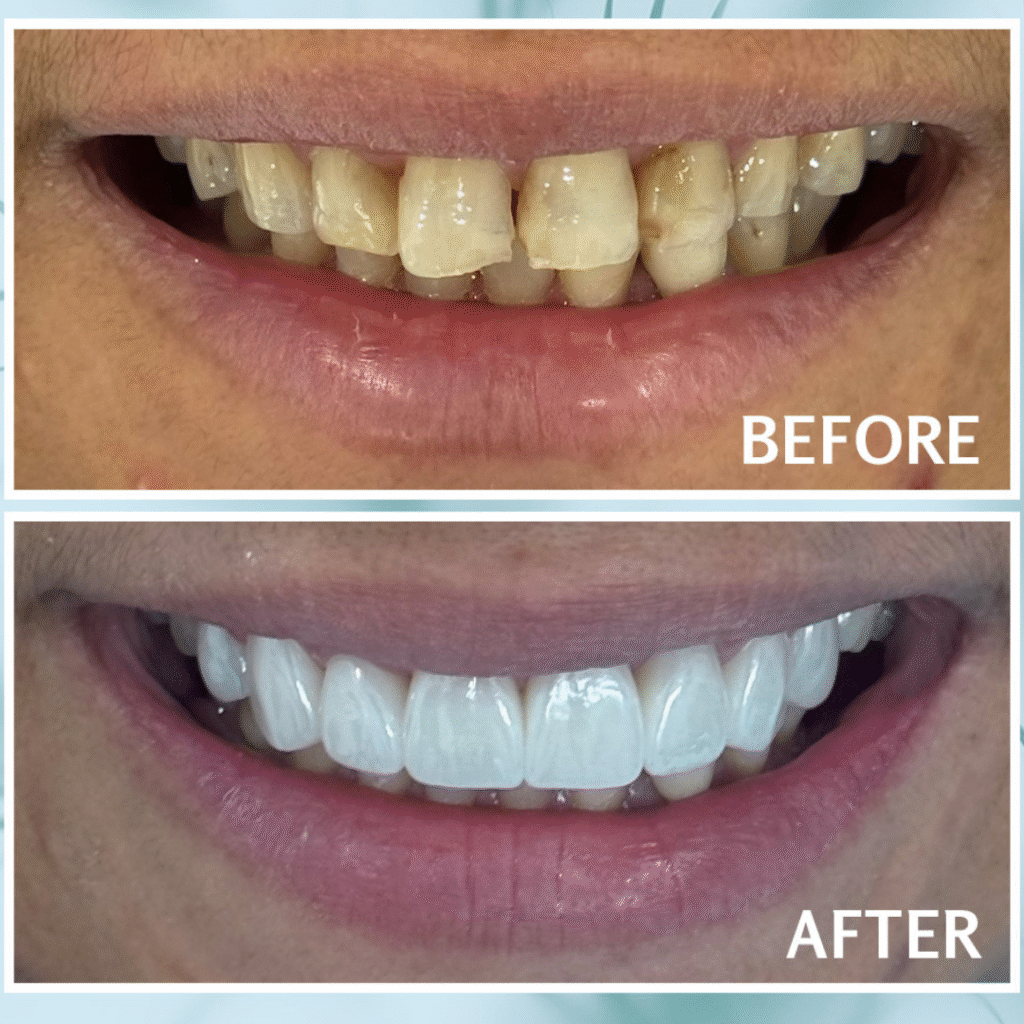
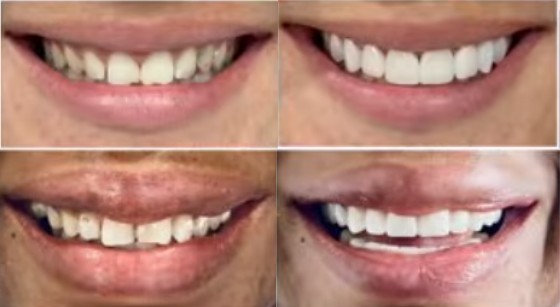
Consultations at our practice are free. Patients from across Tampa Bay, including Riverview, Brandon, Valrico, and Apollo Beach, are welcome. Learn more about the process on the smile makeover page or browse the before and after gallery to see the range of cases that have been treated.
Request your free consultation here.
Frequently Asked Questions
Do veneers or crowns cause any long-term side effects?
No, not when the treatment is properly planned and executed. Ceramic restorations placed on healthy teeth don’t introduce health problems. In many cases, correcting tooth shape and contact points actually improves gum health over time by reducing the areas where food and bacteria accumulate. The key is that health issues must be addressed before cosmetic work begins.
Will my teeth be weaker after a smile makeover?
Not in a clinically meaningful way. Some enamel preparation is involved depending on the case, but the ceramic restoration replaces and protects that surface. When designed with proper thickness, proportions, and bite alignment, veneers and crowns are durable restorations that hold up well under normal function. Cases where teeth feel weaker after treatment are usually the result of problems that weren’t identified beforehand.
What if I have gum issues, can I still get veneers?
Yes, but the gum health needs to be fully resolved first. Active gum disease or significant inflammation must be treated and stable before any ceramic restorations are placed. Once gum health is confirmed, cosmetic treatment can proceed normally. This sequencing protects both the longevity of the restorations and the underlying tissues.
How soon after a smile makeover will I see the health benefits?
Most patients notice a difference in how effectively they can clean their teeth within the first few weeks of having their restorations placed. Improved tooth shape and contact means less food trapping, which means less plaque buildup in those areas. Gum tissue that was chronically irritated by poor contacts often shows visible improvement within one to two months.
At a Glance
- Who is a good candidate for a smile makeover? Adults with healthy teeth and gums (or resolvable dental issues) who want to correct cosmetic concerns such as worn, chipped, discolored, crowded, or unevenly spaced teeth. Patients with active gum disease or untreated decay must address those issues first, after which cosmetic treatment can proceed.
- How long does a smile makeover take? Most smile makeover cases using ceramic veneers or crowns are completed within a few weeks from the initial consultation to final placement. Cases that require prior restorative treatment may take longer depending on what needs to be resolved before cosmetic work begins.
- How many veneers are typically needed in a smile makeover? Most smile makeover cases involve six to sixteen teeth depending on which teeth are visible in the patient’s smile zone and what their cosmetic goals are. A focused front-teeth case commonly includes six to eight veneers, while a full aesthetic zone treatment covers up to sixteen teeth across the upper and lower arches.
- How long do ceramic veneers last? Ceramic veneers and crowns typically last ten to twenty years with proper oral hygiene and regular dental care. Longevity depends on bite alignment, oral habits, and whether the underlying teeth were healthy at the time of placement. They are considered a long-term cosmetic investment, not a temporary fix.
- What are the main advantages of veneers over braces for correcting a smile? Ceramic veneers correct spacing and gaps while simultaneously addressing chips, discoloration, worn edges, and shape irregularities, all in a single treatment phase. Braces can move teeth but cannot change their surface condition, color, or shape. Veneer treatment is typically completed in weeks rather than the one to two years required for orthodontic treatment.