
Last Updated on August 20, 2026
How Do You Actually Get the Most Out of Your Dental Insurance?
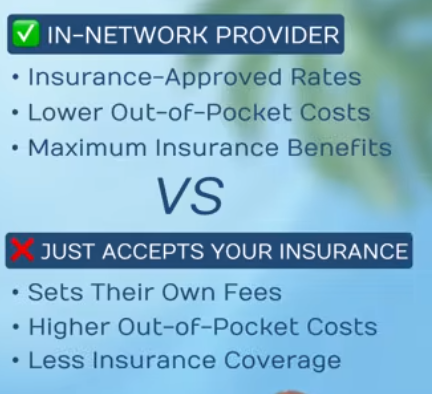
The single biggest factor in how much you pay out of pocket is whether your dentist is in-network or simply “accepts” your insurance. In-network providers are contractually bound to your insurance company’s rates. Providers who just accept your insurance can charge whatever they want, and you pay the difference.
Most patients assume that if their dentist “takes” their insurance, they’re getting full value from their plan. That assumption costs a lot of people a lot of money every year. There’s an important clinical and financial distinction between a provider who accepts your insurance and one who is actually in-network with your plan. This article explains the difference, why it matters for your out-of-pocket costs, and how to make sure your coverage is working as hard as it should be.
Before the full explanation, here are the key points:
- In-network providers charge the rate your insurance company has pre-negotiated, which keeps your out-of-pocket costs predictable and lower.
- Out-of-network providers who “accept” your insurance can charge their own rates. Your insurance pays a portion; you cover whatever’s left.
- Choosing an in-network dentist is one of the simplest ways to reduce what you actually pay for dental care.
Ready To Get Started?
Request your appointment at Riverview Dental Art. Discover complete health dentistry!
Call 813.358.4117Request AppointmentWhat Is the Difference Between “In-Network” and “Accepts Your Insurance”?
An in-network dental provider has a contractual agreement with your insurance company to charge specific pre-negotiated rates for procedures. A provider that simply “accepts your insurance” has no such agreement and can set their own fees. Your insurance reimburses at the same rate regardless, and the patient pays the gap.
This is one of those things that sounds like a minor technicality but ends up making a very real difference on your bill. A lot of patients hear “we take your insurance” and assume that means their coverage will work the same way it would anywhere. It doesn’t. Not always.
Here’s the difference. When a dentist is in-network with your plan, they’ve agreed to a fee schedule. That fee schedule is set by the insurance company. So when you come in for a cleaning, a filling, or any other covered procedure, the dentist charges the contracted rate. Your insurance pays their portion of that rate. You pay your portion. The numbers are predictable because the fee itself is capped.
When a dentist simply accepts your insurance without being in-network, they charge their own rate. Your insurance pays a percentage of what it considers a “reasonable and customary” fee, which may be lower than what the dentist actually charges. The remaining balance falls to you. That gap can be meaningful, especially for more involved treatment.
“There is an important difference between a dental office that is an in-network provider and one that simply takes your insurance,” as Dr. Espino puts it. It’s a distinction worth understanding before you book your next appointment.
Why Does In-Network Status Matter So Much for Out-of-Pocket Costs?
In-network status directly caps the fee a dentist can charge for covered procedures, which limits what the patient owes after insurance pays. Without that cap, patients at out-of-network providers pay the difference between the dentist’s actual fee and whatever their insurance decides to reimburse, which can add up significantly over time.
Think about it from a practical standpoint. You have a PPO plan with 80% coverage for basic restorative work. If your in-network dentist charges the contracted rate of $150 for a procedure, your insurance pays $120 and you pay $30. That’s straightforward.
Now imagine an out-of-network provider charges $250 for the same procedure. Your insurance still calculates its reimbursement based on their own “usual and customary” rate, say $150. They pay 80% of that, which is $120. You owe the $130 difference. That’s more than four times the out-of-pocket cost for the exact same procedure, just because the provider isn’t contracted with your plan.
Multiply that across a full year of dental care, especially if you’re managing a family plan, and the difference between choosing an in-network provider and one who simply “accepts” your insurance becomes a real number. It’s one of the most underutilized ways patients can keep dental costs manageable without changing anything about the quality of care they receive.
How Do You Know If a Dentist Is Truly In-Network?
To confirm in-network status, contact your insurance provider directly and ask whether a specific dental practice is contracted with your plan. You can also ask the dental office directly. A genuine in-network provider will be able to confirm the contracted fee schedule and verify your benefits before treatment begins.
The safest approach is to verify from both ends. Call your insurance company and ask which dentists in your area are in-network for your specific plan. Then call the dental office and confirm directly. Don’t rely on general language like “we accept most insurances.” Ask specifically: “Are you in-network with my plan?”
Most in-network practices will also offer to verify your benefits before your first visit. That means checking your coverage levels, your annual maximum, what procedures are covered and at what percentage, and whether you have a deductible remaining. A practice that takes these steps upfront is giving you real information to plan around, not just a general assurance that they “take” your insurance.
At Riverview Dental Arts, the team verifies patient benefits and files claims directly on behalf of patients. If it’s a PPO plan, the practice is in-network. That confirmation removes the guesswork and makes it possible to give patients an accurate picture of their out-of-pocket costs before any treatment begins.
Can Veneers Correct Uneven or Asymmetrical Teeth at the Same Time?
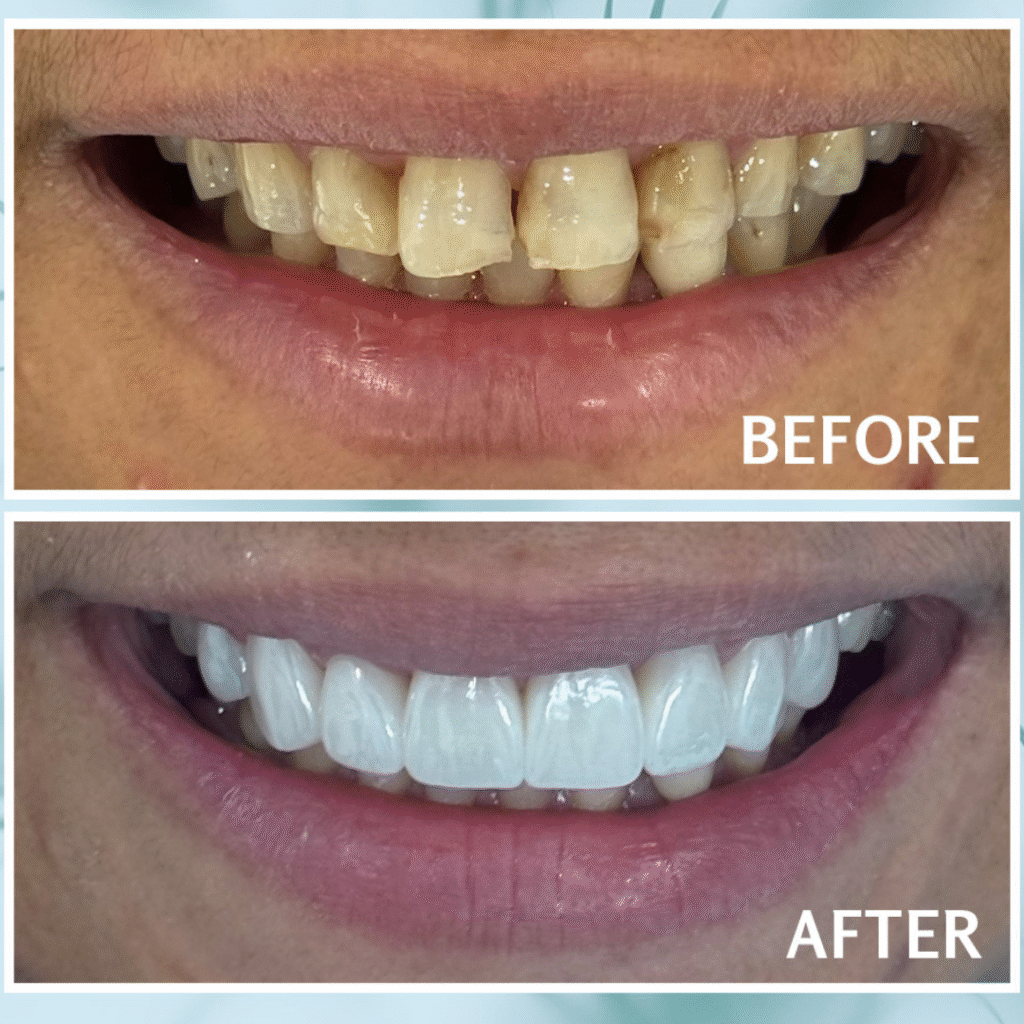
Yes. Ceramic veneers correct shape, length, and symmetry as part of the same design process used to close a gap or improve color. Each tooth is individually shaped within the overall smile design, so asymmetries and size mismatches can be corrected simultaneously without requiring a separate procedure.
Symmetry is one of those things patients notice without necessarily being able to name it. They’ll describe it as “nothing looks the same” or “one side just seems off.” What they’re usually seeing is a combination of slightly different lengths, different edge shapes, or width variation that makes the teeth read as unmatched.
When ceramic restorations are designed properly, every tooth in the aesthetic zone is considered in relation to the others. The central incisors, the laterals, the canines, all of them are shaped with the overall smile composition in mind. A tooth that’s slightly shorter than its neighbor gets brought up to a consistent length. One that’s chipped or irregularly shaped gets a consistent profile. The whole smile comes together as a designed unit rather than a collection of individual teeth that happen to be next to each other.
This is why the case Dr. Espino describes, gap plus asymmetry plus color, is actually very manageable. All three issues get addressed in the same design phase and corrected in the same set of restorations. Patients who come in thinking they have three problems often leave understanding they really had one case.
What Does It Mean to “Maximize” Your Dental Benefits?
Maximizing dental benefits means using your annual coverage allowance strategically so you pay as little out of pocket as possible for necessary care. Most PPO plans reset annually, and unused benefits don’t carry over. An in-network provider who actively helps patients plan their treatment timing and claim filing can significantly reduce what patients pay year over year.
Most dental insurance plans come with an annual maximum, typically somewhere between $1,000 and $2,000 per year. That’s the most the insurance company will pay toward your care in a given calendar year. What most patients don’t realize is that unused benefits expire. If you don’t use them, they don’t roll over. You simply lose them at the end of the year.
Maximizing your benefits means being intentional about when treatment is scheduled and how claims are submitted. If you’re approaching the end of the year with unused coverage and have treatment that’s been recommended, scheduling it before the year closes can mean the difference between paying out of pocket and having it covered. A dental office that actively tracks this on behalf of patients saves money in ways that rarely get acknowledged.
Beyond timing, the right provider also knows how to file claims accurately to capture all available coverage. This matters more than most patients realize. Incorrect or incomplete claim submission can result in lower reimbursement than the patient is actually entitled to. Having an office that handles this thoroughly on your behalf is a real, practical benefit, not just a service nicety.
Does Being In-Network Mean Compromising on Quality of Care?
No. In-network status reflects a billing and fee agreement between the dental practice and the insurance company. It has no bearing on the clinical quality of care, the materials used, or the experience of the treating dentist. Patients can receive the same high-quality treatment at an in-network provider as anywhere else, often at a significantly lower out-of-pocket cost.
This comes up often, and it’s worth addressing directly. There’s a perception in some circles that in-network practices are cutting corners to accommodate the contracted rates. That perception isn’t accurate as a general rule. The negotiated rates reflect what the insurance company has determined is a fair market fee for covered procedures. They don’t dictate the clinical approach, the materials selected, or the time a dentist spends with a patient.
Dr. Espino and the team at our Riverview practice use the same ceramic materials, the same diagnostic technology, and the same clinical standards regardless of how a patient’s care is being paid for. The in-network agreement affects what gets billed. It doesn’t affect what gets done clinically.
Choosing an in-network provider means accessing the same quality of care while keeping the financial side of treatment as efficient as possible. That’s the whole point of having insurance in the first place.
What Types of Dental Care Does Insurance Typically Cover?
Most PPO dental insurance plans cover preventive care (cleanings and exams) at 100%, basic restorative procedures (fillings) at 70–80%, and major restorative procedures (crowns, extractions) at 50%. Cosmetic procedures such as veneers are generally not covered. Coverage percentages and annual maximums vary by plan.
Understanding what’s actually covered, and at what percentage, helps patients plan their care without surprises. Here’s a general framework for how most PPO plans are structured:
- Preventive care (cleanings, exams, X-rays): Typically covered at 100% when using an in-network provider. These are the visits that catch problems early and are designed to be cost-free barriers to regular care.
- Basic restorative (fillings, simple extractions): Usually covered at 70–80% after any applicable deductible. The in-network fee cap keeps the total amount lower even before the insurance percentage is applied.
- Major restorative (crowns, root canals, partial dentures): Commonly covered at 50%. For higher-cost procedures, the difference between in-network and out-of-network pricing becomes particularly significant.
- Orthodontic treatment: Some plans include a lifetime orthodontic benefit, often ranging from $1,000 to $2,000. Coverage varies widely by plan.
- Cosmetic procedures: Ceramic veneers (thin porcelain shells bonded to the front surface of teeth to improve shape, size, and color) and purely cosmetic ceramic crowns (full-coverage porcelain restorations used for aesthetic purposes rather than structural necessity) are generally not covered by dental insurance. However, if a crown is clinically necessary due to structural tooth damage, partial coverage may apply depending on the plan.
The cleanest way to understand your specific coverage is to have the dental office verify your benefits before your visit. That verification gives you the actual percentages, remaining deductible, annual maximum remaining, and what specific procedures are covered under your plan.
Is Now a Good Time to Review How You’re Using Your Dental Benefits?
If you haven’t been to the dentist recently, or if you’re not sure whether your current provider is truly in-network with your plan, now is a practical time to find out. Annual maximums reset at the end of the year, and any unused benefits are simply gone. Preventive visits are covered at 100% under most plans, which means there’s genuinely no financial reason to put off a cleaning or exam.
For patients in the Tampa Bay area, including Riverview, Brandon, Valrico, and Apollo Beach, Riverview Dental Arts is in-network with most PPO insurance plans. The office handles benefit verification and claim filing on behalf of patients, so there are no surprises on the billing side. General dentistry needs, from cleanings and fillings to more involved restorative care, are all available under one roof.
If you’re also curious about cosmetic treatment, free consultations are available. You can also browse th esmile makeover page for an overview of cosmetic services. When you’re ready to schedule your free consultation here. Browse the before and after gallery to see how vertical dimension cases look before and after treatment.
Frequently Asked Questions
What does “in-network” mean for dental insurance?
In-network means the dental practice has a contractual agreement with your insurance company to charge pre-negotiated rates for covered procedures. This fee cap directly reduces what you pay out of pocket compared to an out-of-network provider who can set their own fees. Before choosing a dentist, confirming in-network status with your specific plan is one of the most practical steps you can take to control dental costs.
Can a dentist charge more than my insurance pays even if they “accept” my insurance?
Yes. A dentist who accepts but is not contracted with your insurance plan is not bound by any fee schedule. Your insurance will reimburse based on its own rates, and you are responsible for whatever the provider charges above that amount. This balance billing can add up significantly, especially for major restorative procedures. In-network providers cannot balance-bill for covered services.
What happens to my dental benefits if I don’t use them before the year ends?
Most PPO dental plans have an annual maximum benefit, typically $1,000 to $2,000, that resets at the start of each calendar year. Any unused portion of that maximum does not carry over. If you have remaining benefits and outstanding treatment that’s been recommended, scheduling it before year-end captures coverage you’ve already paid for through your premiums.
Does being in-network affect the quality of dental care I receive?
No. In-network status is a billing arrangement between the dental practice and your insurance company. It has no effect on the clinical care provided, the materials used, or the time and attention the dentist gives each patient. Patients receive the same standard of care at an in-network practice as they would anywhere else, with the added benefit of lower, predictable out-of-pocket costs for covered procedures.
At a Glance
- Who benefits most from choosing an in-network dental provider? Any patient with a PPO dental insurance plan benefits from choosing an in-network provider. In-network status caps the fees charged for covered procedures, which directly reduces out-of-pocket costs. Patients who see an out-of-network provider may be responsible for the gap between the dentist’s fee and whatever their insurance decides to reimburse, with no cap on that difference.
- How do I verify if a dentist is in-network with my plan? Call your insurance company and ask which providers in your area are contracted with your specific plan. Also confirm directly with the dental office. A genuine in-network provider will be able to name the insurance plans they are contracted with and can verify your individual benefits before your first appointment, including coverage percentages, deductible status, and annual maximum remaining.
- What does dental insurance typically cover at 100%? Most PPO dental plans cover preventive care, including routine cleanings, comprehensive exams, and standard X-rays, at 100% when the patient uses an in-network provider. These visits are designed to be financially accessible because catching and preventing problems early reduces the need for more costly restorative treatment later.
- What is the difference between a dental annual maximum and a deductible? An annual maximum is the total amount your insurance will pay toward dental care in a given year. Once that limit is reached, you pay 100% of remaining costs until the plan resets. A deductible is a fixed amount you must pay out of pocket before your insurance begins contributing to covered procedures. Both figures reset annually under most PPO plans.
- Does dental insurance cover cosmetic procedures like veneers or smile makeovers? Purely cosmetic procedures, including ceramic veneers and cosmetic smile makeovers, are generally not covered by dental insurance. However, if a ceramic crown is clinically necessary due to structural tooth damage rather than cosmetic preference alone, partial insurance coverage may apply depending on the plan. Patients interested in cosmetic treatment can ask about financing options to manage costs outside of insurance.