
Last Updated on September 23, 2026
How to Choose a Cosmetic Dentist for Your Smile Makeover in Tampa Bay
The most important factor when choosing a cosmetic dentist for a smile makeover is verified experience with real cases. Look for a dentist who performs these procedures regularly, shows authentic before and after photos of their own patients, explains their full process, and demonstrates clear control over the case from start to finish.
This question comes up constantly, and it matters more than most patients initially realize. Choosing the wrong dentist for a smile makeover doesn’t just mean a disappointing result. It can mean restorations that don’t fit well, look unnatural, or need to be redone entirely. This article covers exactly what to look for, what red flags to avoid, and how to evaluate a cosmetic dentist before you commit to treatment. The answer isn’t complicated, but the details are important.
Before you read further, the three things that matter most:
- The dentist should perform smile makeovers regularly, not occasionally.
- Every before and after photo they show you should be their own actual patient work, not purchased stock images.
- They should be able to explain their full process clearly, including how they design the smile, what labs they use, and how they maintain control from consultation to final placement.
Ready To Get Started?
Request your appointment at Riverview Dental Art. Discover complete health dentistry!
Call 813.358.4117Request AppointmentWhy Does Experience Level Matter So Much for a Smile Makeover?
Cosmetic dentistry procedures like veneers and crowns require a refined clinical workflow developed through repetition. A dentist who performs these cases regularly has the process, the design judgment, and the lab relationships to produce consistent, predictable results. One who performs them occasionally does not.
Here’s the thing about cosmetic dentistry. It looks straightforward from the outside. You go in, veneers get placed, you leave with a new smile. But there’s an enormous amount of decision-making happening behind that result, and the quality of those decisions depends almost entirely on how many times a dentist has made them before.
Ceramic veneers are thin porcelain shells bonded to the front surface of natural teeth to improve their shape, size, and color. Ceramic crowns are full-coverage porcelain restorations that cap the entire visible tooth, used when more structural correction or support is needed. Both require precise planning, precise fabrication, and precise placement. Done well, they last a decade or more and look completely natural. Done without enough experience behind them, the results can look off in ways that are genuinely hard to correct.
“You need to choose somebody who does these procedures all the time,” as Dr. Espino puts it. “They need to know and have that workflow down from controlling your case from start to finish.” That phrase, controlling the case, is the key idea. A dentist with a refined workflow isn’t improvising at each stage. They have a reliable system for design, communication with the lab, temporary placement, patient approval, and final delivery. That system is what produces consistency.
What Does “Controlling the Case” Actually Mean?
Case control in cosmetic dentistry means the treating dentist actively manages every stage of treatment, from the initial smile design through temporary placement and lab communication to final ceramic delivery, rather than delegating critical decisions or working without a structured process.
A lot of patients focus entirely on the final result they see in photos, and that’s understandable. But the photos are the output of a process. The process is what you’re actually evaluating when you choose a dentist.
A well-controlled smile makeover case follows a consistent structure. The smile is designed before any teeth are prepared. Temporary restorations are placed so the patient can see and evaluate the proposed result before anything permanent is finalized. The lab receives specific, documented instructions based on a tested prototype, not a vague description. Adjustments made during the temporary phase are carried forward into the permanent fabrication. Nothing about the final result should be a surprise to either the patient or the dentist.
When a dentist doesn’t have this kind of structured process, outcomes become unpredictable. Patients end up with results that weren’t what they expected. Shape, proportion, or shade decisions get made without the patient’s input. The lab produces something based on incomplete instructions. These are avoidable problems, but only if the dentist is running a tight, experienced workflow.
How Do You Evaluate Before and After Photos the Right Way?
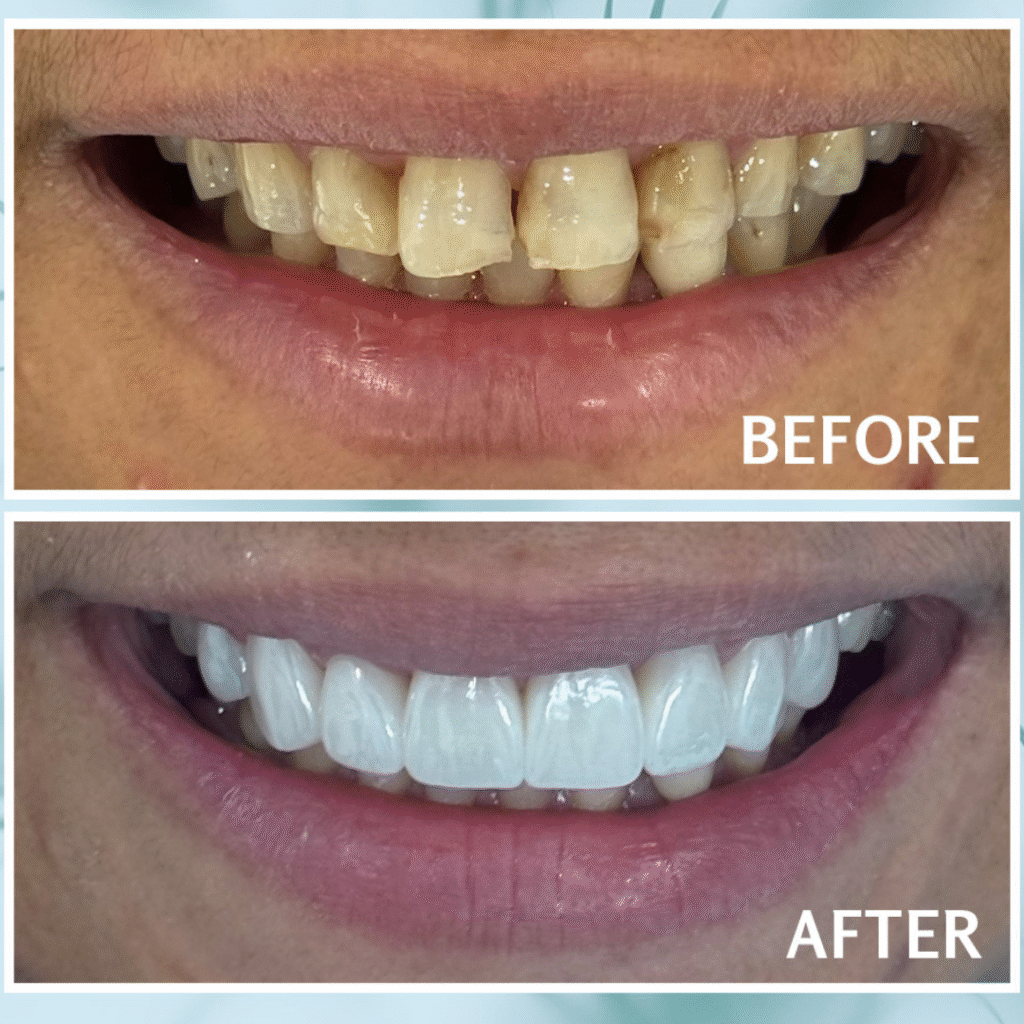
When evaluating a cosmetic dentist’s before and after photos, look specifically for consistency across multiple cases, natural-looking results in varied patients, and confirmation that the images shown are the dentist’s own work rather than stock images or cases from another practice.
This is where a lot of patients get misled, and it’s worth being direct about it. There is a significant amount of misleading marketing in cosmetic dentistry. Practices run promotions for veneers or smile makeovers and illustrate those promotions with images they purchased online. Those images are not their patients. Those results are not their work. And the patients who sign up based on those images have no reliable way of knowing what their actual results will look like.
“So many things I see online where somebody’s offering a special for a makeover, for veneers, they are showing you stock images that they purchased online, and it’s not their true work,” Dr. Espino notes. It’s a straightforward observation, but the implications are significant. If a practice can’t show you their own consistent results, you don’t actually know what you’re signing up for.
What to look for instead:
- Multiple before and after cases showing the same quality across different patients
- Cases that look natural, not artificially white or uniform in a way that looks prosthetic
- A dentist who can speak specifically about the cases shown, because they treated those patients
- Consistency of results over time, not just one impressive case among many mediocre ones
- Cases that resemble your own starting point, so you can realistically project what your result might look like
The point isn’t to find a dentist with perfect cases only. It’s to find a dentist whose real work is good enough, consistently enough, that you can trust the process that produced it.
What Questions Should You Ask a Cosmetic Dentist Before Starting?
Before committing to a smile makeover, patients should ask about the dentist’s process from design to delivery, which dental lab is used and whether the dentist has a direct working relationship with them, how temporaries are used in the case, and how many similar cases the dentist completes each year.
Most patients don’t know what to ask at a cosmetic dentistry consultation, and dentists don’t always volunteer the process-level information patients need to make a good decision. So here are the practical questions worth asking.
How do you design the smile before you start? A dentist with a real process will explain how they develop the design before any preparation of the teeth happens, and how temporaries factor into that design phase.
What lab do you use, and how do you communicate with them? The lab relationship matters. A dentist working with a lab they know well and communicate with in detail will get better, more consistent results than one sending impressions to an unfamiliar lab with minimal instructions. Dr. Espino, with 15-plus years in cosmetic dentistry, uses an in-house lab, which gives direct fabrication control that most external lab relationships can’t replicate.
How many smile makeover cases do you complete per year? Volume matters. There’s no magic number, but a dentist who treats cosmetic cases every week has significantly more refined judgment than one who performs them a few times a year.
Can I see cases that started with a situation similar to mine? This is important. Seeing beautiful results from patients who started with very different issues than yours tells you less than seeing a few cases that genuinely parallel your starting point.
What Are the Warning Signs to Avoid?
Red flags when evaluating a cosmetic dentist include the use of stock images in promotional materials, inability to show multiple consistent before and after cases, no clear explanation of the design or temporary phase, and aggressive pricing promotions that suggest high volume over quality care.
Not always obvious, but often avoidable. Here’s what to watch for.
- Stock photo galleries: If a practice’s social media or website shows before and after images that look professionally produced but the dentist can’t speak to the specific cases, those are likely purchased images.
- No discussion of process: A dentist who can’t clearly explain how they design the smile, what role temporaries play, and how they communicate with their lab probably doesn’t have a reliable structured process.
- One impressive case, inconsistent rest: A single exceptional result doesn’t tell you much. What you’re looking for is consistent quality across many different patients and case types.
- Vague answers about materials or labs: Experienced cosmetic dentists know exactly what materials they use, why they use them, and what their lab relationship looks like. Vague answers here are a signal worth taking seriously.
- Heavy discount promotions with limited case examples: Deep discounting on cosmetic cases often reflects a practice optimizing for volume rather than quality. It’s not a universal rule, but it’s worth investigating further before committing.
How Much Does a Smile Makeover Cost, and What Should You Expect to Pay?
At Riverview Dental Arts, ceramic veneers and crowns are priced at $500 per tooth with a minimum of six teeth. Total cost depends on how many teeth are included in the aesthetic zone and the specific scope of treatment required.
| Treatment Scope | Teeth | Riverview Dental Arts | Tampa Bay Average |
| Minimum case | 6 | $2,995 | $7,200–$12,000 |
| Front eight teeth | 8 | $4,000 | $9,600–$16,000 |
| Upper arch | 10 | $5,000 | $12,000–$20,000 |
| Full aesthetic zone | 16 | $8,000 | Up to $20,000+ |
| Consultation | – | Free | $75–$200+ |
The pricing here is below Tampa Bay market rates because all restorations are designed and fabricated in-house. There are no external lab fees or third-party markups. The ceramic quality is the same. The cost structure is not.
Cosmetic veneers are generally not covered by dental insurance. If any teeth in the case have documented structural damage, partial coverage may apply depending on the patient’s plan. The practice is an in-network PPO provider for most major insurances.
What determines the final cost of a smile makeover?
- Number of teeth treated: At $500 per tooth, the total scales directly with how many teeth fall within the patient’s visible smile zone. A focused six-tooth case starts at $2,995. A full upper and lower aesthetic zone treatment covering sixteen teeth is $8,000.
- Type of restoration needed: Ceramic veneers are used for primarily cosmetic corrections to front surface shape, size, and color. Ceramic crowns are indicated when more structural support is required, such as for teeth with significant existing damage or large existing restorations. Crowns involve more preparation and are typically priced accordingly.
- Case complexity: Cases requiring bite correction, gum contouring, or treatment across both arches involve more planning steps and more fabrication detail, which affects total scope and timing.
- Prior restorative treatment needed: If underlying health issues such as decay, failing old restorations, or active gum disease need to be resolved before cosmetic work can begin, those procedures are planned and quoted separately from the cosmetic phase.
- Individual treatment goals: Some patients want to address only the upper front teeth. Others want a complete upper and lower smile transformation. The scope is always determined by what the patient wants and what the clinical evaluation supports.
Is This the Right Time to Start Your Smile Makeover Evaluation?
If you’ve been thinking about a smile makeover and doing research on how to choose the right dentist, you’re already doing the most important thing: approaching this as a decision that deserves real due diligence, not just a response to a promotional offer.
The evaluation process itself costs nothing. A consultation appointment gives you the chance to ask the questions above, see real case examples, hear the process explained directly, and understand what the treatment scope and timeline would look like for your specific situation. Patients from across Tampa Bay, including Riverview, Brandon, Valrico, and Apollo Beach, are welcome.
Browse the before and after gallery to see actual patient cases across a range of starting points. Visit the smile makeover page for more detail on the full treatment process. When you’re ready, schedule your free consultation here and come in with your questions. That’s exactly the kind of visit worth having before making any commitment.
Frequently Asked Questions
How do I know if a dentist’s before and after photos are real?
Ask the dentist directly about specific cases in their gallery. An experienced cosmetic dentist who treated those patients will be able to speak to the details of each case, what the patient’s starting point was, what treatment was done, and how the result was achieved. If they can’t discuss the cases specifically, that’s worth paying attention to. Stock images look polished but lack the clinical context that real cases always carry.
Is it worth paying more for an experienced cosmetic dentist?
For a smile makeover, experience is probably the most important variable in your outcome. A lower-cost provider without a refined workflow and verified case history introduces real risk of a result that needs to be corrected or redone. When you factor in the cost of corrections, the value of an experienced cosmetic dentist with a structured process becomes clear. Volume of real cases is a better indicator of quality than price alone.
What should a cosmetic dentist be able to explain before I decide?
They should be able to explain how the smile is designed before any teeth are prepared, what role temporaries play in the process, which lab they use and how they communicate with them, and what the timeline from consultation to final placement looks like. A dentist who can answer these questions clearly and specifically has a real process behind the results they show you. One who can’t is worth approaching with caution.
Does it matter if the dental lab is in-house or external?
It can matter significantly. When a dentist fabricates restorations in-house, they have direct control over the design process and can communicate adjustments with precision. External labs can produce excellent work, but the quality of the outcome depends heavily on how clearly the dentist communicates the case details. The more direct the relationship between the treating dentist and the fabrication process, the more control there is over the final result.
At a Glance
- Who is a good candidate for a smile makeover? Adults with healthy teeth and gums (or resolvable dental issues) who want to correct cosmetic concerns such as worn, chipped, discolored, misshapen, or unevenly spaced teeth are typically good candidates. Patients with active gum disease or untreated decay must address those issues first; once dental health is confirmed, cosmetic treatment can proceed.
- How long does a smile makeover take from consultation to final placement? Most smile makeover cases using ceramic veneers or crowns are completed within several weeks. The timeline includes a consultation and design phase, a temporary placement and refinement period, and final ceramic fabrication and delivery. Cases requiring prior restorative treatment may take longer depending on what needs to be resolved before cosmetic work begins.
- How many veneers are typically needed for a smile makeover? Most smile makeover cases involve six to sixteen ceramic veneers or crowns depending on how many teeth are visible in the patient’s smile zone and what their cosmetic goals are. A focused front-teeth case commonly covers six to eight teeth, while a full upper and lower aesthetic zone treatment involves up to sixteen restorations.
- How long do ceramic veneers last? Ceramic veneers and crowns typically last ten to twenty years with proper oral hygiene and regular dental care. Longevity depends on bite alignment, oral habits such as clenching or grinding, and whether the underlying teeth were in good health at the time of placement. They are considered a long-term cosmetic investment, not a temporary fix.
- What are the main advantages of veneers over braces for improving a smile? Ceramic veneers correct spacing and alignment while simultaneously addressing chips, discoloration, worn edges, and shape inconsistencies, all in a single treatment phase lasting weeks rather than years. Orthodontic treatment repositions teeth but cannot change their surface condition, color, or shape. Veneers also involve a tested design phase where the patient approves the result before anything permanent is placed.