
Last Updated on September 23, 2026
Why Do Your Teeth Look Shorter as You Age? Grinding, Vertical Dimension, and How to Fix It in Tampa Bay
Quick Answer: Teeth look shorter with age primarily because of years of grinding, a habit that slowly wears down the biting edges without the patient noticing. Rebuilding the natural length and height of those teeth, what dentists call vertical dimension, restores a fuller, more youthful smile without cosmetic shortcuts.
This is one of the most common complaints patients bring up during consultations, and it almost always catches them off guard when they hear the explanation. They’ve noticed their smile looks smaller, less full, somehow older than it used to. What they usually don’t realize is that the teeth themselves have gotten shorter. This article covers why that happens, why grinding is almost always the underlying cause, and what the treatment process looks like when vertical dimension needs to be restored.
Before we go further, here are the key points:
- Grinding gradually wears down the biting edges of teeth over years, shortening them without any single obvious moment of change.
- The loss of tooth length reduces what dentists call vertical dimension, which affects how full and youthful the smile appears.
- Restoring vertical dimension through ceramic restorations rebuilds the teeth back to where they were before the grinding habit shortened them.
Ready To Get Started?
Request your appointment at Riverview Dental Art. Discover complete health dentistry!
Call 813.358.4117Request AppointmentWhy Do Teeth Look Shorter as We Get Older?
Answer: Teeth appear shorter with age primarily because grinding (bruxism) wears down the biting edges over time. This gradual shortening reduces the overall height of the smile, making it look smaller, older, and less full than it did in younger years.
A lot of patients assume this is just part of getting older, the way skin changes or posture shifts. And in a way it is, but not in the way most people think. The teeth themselves don’t naturally shrink. They get worn down. There’s a difference, and that difference matters a lot for how the problem gets treated.
Grinding is an incredibly common habit, and it’s often happening during sleep, which means patients have no real awareness of it. Over years, sometimes decades, the biting surfaces of the upper and lower front teeth wear against each other. Each year the change is subtle. Over ten or twenty years, the cumulative shortening becomes visible, especially when you compare a current photo to one from twenty years earlier.
“One of the most common complaints we hear is, I don’t show as much teeth as I used to,” as Dr. Espino explains it. That observation, I don’t show as much teeth, is a clinical sign. It tells you the vertical dimension of the smile has been reduced. The teeth that should be visible when someone smiles or speaks naturally have been ground down to the point where they no longer fill the smile the way they once did.
What Is Vertical Dimension, and Why Does It Matter?
Answer: Vertical dimension refers to the natural length and height of the teeth that determines how open the jaw sits at rest and how fully the smile presents. When grinding wears the teeth down, vertical dimension is lost, and the face can take on a collapsed, aged appearance that no amount of whitening or surface cosmetic work will correct.
This is the part that surprises most patients. They come in thinking about whitening or maybe veneers for color, and they’re told the real issue is structural. The teeth are shorter than they should be. That shortening affects not just how the teeth look but how the entire lower third of the face sits.
Think about it from a structural standpoint. The teeth are what hold the jaws apart at their natural resting position. When those teeth wear down, the jaws close slightly further than they should. That over-closure compresses the face. The cheeks can look flatter. The corners of the mouth can turn downward. The lips look thinner. All of these changes happen gradually and get attributed to aging, when what’s actually happening is the architectural support of the face is being slowly reduced by grinding.
Restoring vertical dimension means rebuilding the teeth back to their original natural height. Not taller than they should be. Back to what they were before the grinding started taking them down.
How Does Grinding Cause This, and Is It Always the Reason?
Answer: Grinding (bruxism) is the most common cause of tooth wear and vertical dimension loss, but it is not the only one. Acid erosion, aggressive brushing, and certain dietary habits can also contribute to surface wear. In most cases where patients notice their smile looking shorter with age, grinding is the primary driver.
Not always grinding. But often. That’s the honest answer.
There are cases where acid erosion, from diet, reflux, or other causes, contributes significantly to surface wear. There are cases where abrasion from brushing technique plays a role. But the pattern Dr. Espino sees most consistently in patients who notice their smile shrinking over time is a grinding habit that started years, sometimes decades, before the patient ever thought to mention it to a dentist.
Part of why grinding goes unnoticed for so long is that it usually happens during sleep. The patient isn’t aware of it. Their partner might mention it. Their dentist might see the wear pattern in a checkup. But the patient themselves often has no direct experience of the habit that’s been reshaping their teeth for years. By the time the cosmetic change becomes obvious, the structural change has been building for a long time.
That’s one of the reasons regular checkups matter, not just for cavities. A dentist looking at wear patterns year over year can identify grinding activity and intervene before the cumulative damage becomes a reconstructive problem.
What Questions Should You Ask a Cosmetic Dentist Before Starting?
Before committing to a smile makeover, patients should ask about the dentist’s process from design to delivery, which dental lab is used and whether the dentist has a direct working relationship with them, how temporaries are used in the case, and how many similar cases the dentist completes each year.
Most patients don’t know what to ask at a cosmetic dentistry consultation, and dentists don’t always volunteer the process-level information patients need to make a good decision. So here are the practical questions worth asking.
How do you design the smile before you start? A dentist with a real process will explain how they develop the design before any preparation of the teeth happens, and how temporaries factor into that design phase.
What lab do you use, and how do you communicate with them? The lab relationship matters. A dentist working with a lab they know well and communicate with in detail will get better, more consistent results than one sending impressions to an unfamiliar lab with minimal instructions. Dr. Espino, with 15-plus years in cosmetic dentistry, uses an in-house lab, which gives direct fabrication control that most external lab relationships can’t replicate.
How many smile makeover cases do you complete per year? Volume matters. There’s no magic number, but a dentist who treats cosmetic cases every week has significantly more refined judgment than one who performs them a few times a year.
Can I see cases that started with a situation similar to mine? This is important. Seeing beautiful results from patients who started with very different issues than yours tells you less than seeing a few cases that genuinely parallel your starting point.
What Does the Treatment Process Look Like?
Answer: Restoring vertical dimension involves rebuilding the length and height of the worn teeth using ceramic restorations, typically ceramic veneers on the front teeth and ceramic crowns where more structural support is needed. The process follows a structured design-first approach: consultation and smile design, temporary placement for patient approval, then final ceramic fabrication.
Ceramic veneers are thin porcelain shells bonded to the front surface of natural teeth to restore their shape, size, and appearance. Ceramic crowns are full-coverage porcelain restorations that cap the entire visible tooth, used where the degree of wear or structural compromise requires complete coverage rather than a surface-only restoration. Both are used in vertical dimension cases depending on which teeth need treatment and how extensive the wear is.
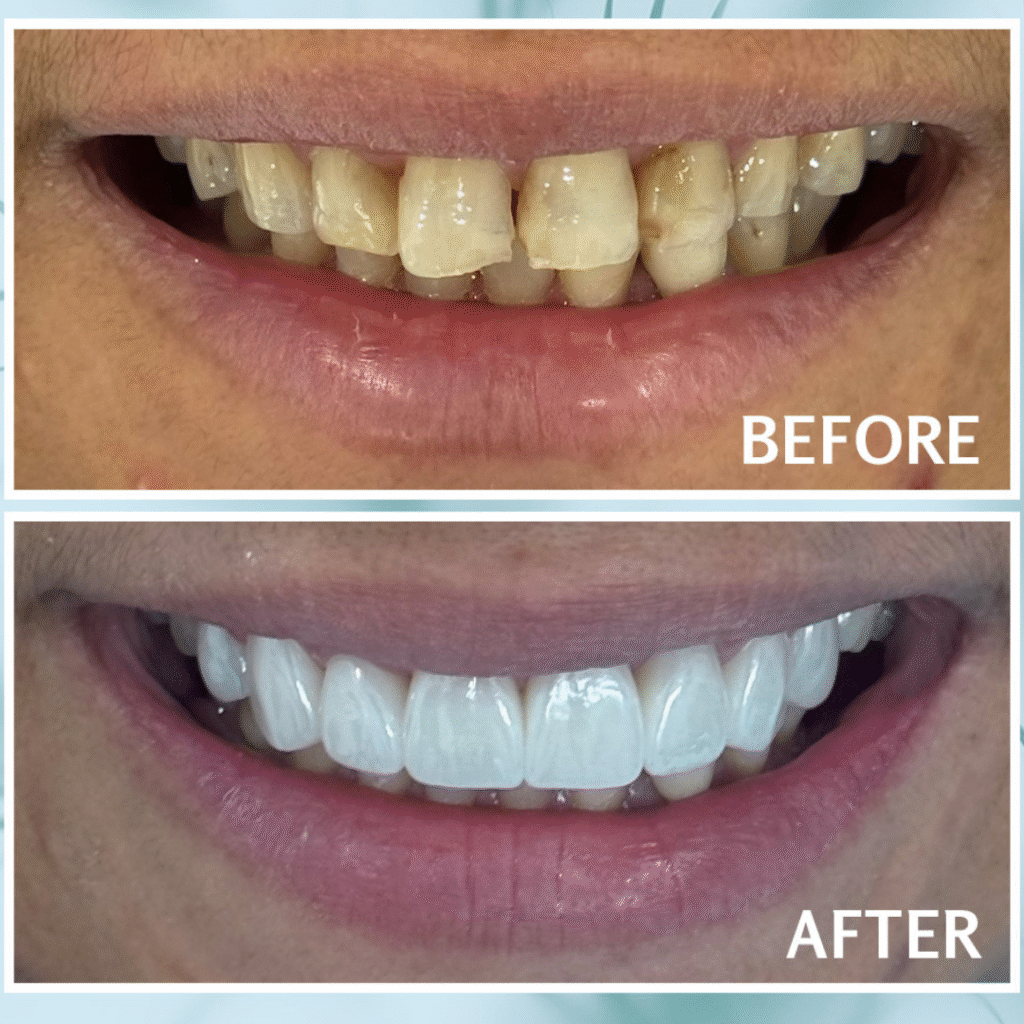
The case in the video is a clear example of what this kind of reconstruction looks like in practice. The patient had serious grinding over the years. The teeth had been worn down significantly. The rebuild involved restoring the length and height of those teeth back to where they would have been before the grinding habit shortened them. The result wasn’t just cosmetically different. It was structurally corrected. The vertical dimension was restored. The smile filled out. The patient looked younger in a way that had nothing to do with color or whitening.
Dr. Espino, with 15-plus years of experience in cosmetic and restorative dentistry, approaches every vertical dimension case with a full evaluation of bite alignment, gum balance, and facial proportions before any treatment begins. The goal is always to rebuild to the correct natural dimension, not to over-correct or under-correct, and to do it in a way that functions properly long term.
Why Can’t Whitening Fix a Smile That Looks Shorter?
Answer: Whitening addresses the color of teeth but has no effect on their shape or length. When the smile looks older or smaller because of worn-down tooth height, whitening will produce brighter teeth that are still too short. The visual result is still a reduced smile. Only restoring the actual length of the teeth corrects the underlying problem.
This comes up a lot. Patients see their smile looking older and their first instinct is whitening. And whitening can be part of an overall treatment plan. But it addresses the wrong thing when the core issue is structural.
Imagine rebuilding a room by repainting the walls when the ceiling has actually dropped. The color might look fresher. But the proportions are still wrong. That’s roughly what happens when whitening is applied to teeth that have been ground down. You end up with brighter, shorter teeth, and the smile still looks compressed and aged.
The fix for a structurally shortened smile is a structural solution: rebuild the length. Once that’s done, shade and color can be part of the overall design. But the architecture has to come first.
Who Is a Good Candidate for Vertical Dimension Restoration?
Answer: Ideal candidates are patients who notice their smile looks shorter or less full than it used to, who have a documented or suspected history of grinding, and whose teeth show visible wear on the biting edges. A clinical evaluation confirming reduced vertical dimension is the definitive indicator for treatment.
If any of the following apply, it’s worth having a conversation with a cosmetic and restorative dentist:
- Your smile looks smaller or less full in photos compared to how it looked ten or fifteen years ago
- The edges of your front teeth look flat, squared off, or visibly worn rather than naturally shaped
- You’ve been told by a dentist that you grind your teeth
- You wake up with jaw tightness or soreness, which can indicate nighttime grinding
- Whitening hasn’t made the visual improvement you expected, because the teeth look short regardless of color
- Your lower face looks slightly compressed or the corners of your mouth turn downward at rest
Not every case presenting with short teeth requires a full reconstruction. But the only way to know what treatment scope makes sense for your specific situation is a proper evaluation. The wear pattern, the degree of vertical dimension loss, and the condition of the underlying teeth all factor into the treatment plan.
How Much Does Restoring Vertical Dimension Cost in Tampa Bay?
Answer: At Riverview Dental Arts, ceramic veneers and crowns are priced at $500 per tooth with a minimum of six teeth. Total cost depends on how many teeth are included in the treatment plan and whether ceramic veneers or full ceramic crowns are indicated for each tooth.
| Treatment Scope | Teeth | Riverview Dental Arts | Tampa Bay Average |
| Minimum case | 6 | $2,995 | $7,200-$12,000 |
| Front eight teeth | 8 | $4,000 | $9,600-$16,000 |
| Upper arch | 10 | $5,000 | $12,000-$20,000 |
| Full aesthetic zone | 16 | $8,000 | Up to $20,000+ |
| Consultation | – | Free | $75-$200+ |
Pricing at our practice is lower than the Tampa Bay market average because all restorations are designed and fabricated in-house. There are no external lab fees and no third-party markup built into the quote. The ceramic quality is the same. The cost structure is not.
Restorative treatment for grinding-related wear may qualify for partial insurance coverage depending on the degree of structural damage and the patient’s specific plan. The practice is an in-network PPO provider for most major insurances. Consultations are always free. .
What determines the final cost of restoring worn, shortened teeth?
- Number of teeth treated: At $500 per tooth, total cost scales directly with how many teeth require restoration to rebuild the full vertical dimension. Cases involving only the front six to eight teeth start at $2,995. Full arch reconstruction is $8,000.
- Type of restoration needed: Ceramic veneers are used for front surface corrections where the underlying tooth structure is largely intact. Ceramic crowns are indicated when wear is extensive or when the structural integrity of the tooth requires full-coverage support. Crowns involve more preparation and are typically a larger part of cases with significant wear.
- Case complexity: Vertical dimension cases involve bite evaluation and functional planning in addition to cosmetic design. Cases where bite correction, multiple arches, or gum contouring are required involve more clinical steps and affect overall scope.
- Prior restorative treatment needed: If grinding has caused damage beyond surface wear, such as cracks, fractures, or loss of filling material, those issues need to be addressed as part of the overall treatment plan and are quoted separately from the cosmetic phase.
- Individual treatment goals: Some patients want to restore only the most visible worn teeth. Others want a complete upper and lower reconstruction. The scope is always determined by the clinical evaluation and the patient’s goals in combination.
Is Now the Right Time to Have This Evaluated?
If your smile looks shorter, less full, or simply older than it used to, the most practical step is to come in and have it properly evaluated. Not to commit to anything. Just to understand what’s actually happening with your teeth and what the realistic options are for your specific situation.
The earlier grinding-related wear is identified, the simpler the treatment tends to be. Early intervention can mean restoring a smaller number of teeth, with a less complex case and a lower total cost, compared to waiting until the wear becomes more extensive. Wear doesn’t stabilize on its own. The grinding habit that caused it doesn’t stop unless it’s actively managed.
Consultations at our office are free, low-pressure, and genuinely useful. Dr. Espino will evaluate your bite, your wear pattern, and your vertical dimension, and give you a clear picture of what treatment would involve. Patients from across Tampa Bay, including Riverview, Brandon, Valrico, and Apollo Beach, are welcome to come in.
Browse the before and after gallery to see how vertical dimension cases look before and after treatment. The smile makeover page covers the full treatment process in more detail. When you’re ready, schedule your free consultation here.
Frequently Asked Questions
- Why does my smile look smaller than it did when I was younger?
In most cases, this is the result of years of grinding wearing down the biting edges of the front teeth. The change is gradual enough that patients rarely notice it happening, but over a decade or two the cumulative shortening becomes visible. The teeth are physically shorter than they were, which makes the smile look less full and the face look older. Restoring the natural length of the teeth corrects the problem directly. - What is vertical dimension and why do dentists talk about it?
Vertical dimension refers to the natural height of the teeth and the position of the jaws when the teeth are in contact. It’s essentially the structural measurement that determines how open or closed the face looks at rest and how fully the smile presents. When grinding wears teeth down, vertical dimension decreases. The lower face can look compressed, the corners of the mouth can drop, and the smile looks smaller. Rebuilding the teeth to their original height restores that dimension and with it, the natural appearance of the smile. - Can the teeth be restored to how they looked before the grinding?
Yes, in most cases. The goal of vertical dimension restoration is to rebuild the teeth to the height and length they would have had before the grinding habit shortened them. Dr. Espino uses ceramic restorations fabricated in-house to rebuild the biting edges and overall length of the worn teeth. The result closely replicates the natural tooth proportions the patient had before years of grinding reduced them. - Will the grinding damage come back after the teeth are restored?
The restorations themselves are durable, but the grinding habit needs to be managed to protect the result long term. Most patients who have vertical dimension restoration are fitted with a nightguard to prevent the same wear pattern from recurring on the new ceramic restorations. Managing the underlying grinding habit is part of how the treatment result is protected over time. A dentist will discuss this as part of the overall treatment plan.
At a Glance
- Who is a good candidate for vertical dimension restoration? Adults whose smile looks shorter or less full than it used to, particularly those with a history of grinding, visible flat or worn biting edges, or jaw tightness upon waking. A clinical evaluation confirming reduced vertical dimension is the definitive indicator. Patients with active gum disease or untreated decay need to address those issues before cosmetic and restorative work begins.
- How long does the treatment take from consultation to final placement? Most cases are completed within several weeks. The process includes a consultation and smile design phase, temporary restoration placement for patient evaluation and approval, and final ceramic fabrication and delivery. Cases requiring prior restorative treatment for grinding-related damage may take longer depending on what needs to be resolved first.
- How many restorations are typically needed? The number depends on which teeth show wear and how far the vertical dimension has been reduced. Most focused cases involve six to ten restorations on the upper front teeth. More extensive cases involving both upper and lower arches may include up to sixteen ceramic veneers or crowns to fully restore the natural height and bite relationship.
- How long do ceramic veneers and crowns last after a rebuild? Ceramic veneers and crowns used to restore vertical dimension typically last ten to twenty years with proper care and a nightguard to manage ongoing grinding. Longevity depends on bite alignment, oral hygiene, and whether the grinding habit is actively managed after treatment. Without a nightguard, the new restorations are vulnerable to the same wear pattern that damaged the original teeth.
- What are the main advantages of ceramic restoration over doing nothing or just whitening? Ceramic restoration actually rebuilds the lost tooth length, which whitening cannot do. Whitening addresses color only and leaves the structural shortening unchanged. Doing nothing allows the grinding to continue shortening the teeth further, eventually requiring a more extensive and costly reconstruction. Ceramic restoration corrects the root cause of the aged appearance by restoring the architecture of the smile, not just its surface color.