
Last Updated on April 7, 2026
After Braces, Why Do Some Patients Still Need Veneers to Complete Their Smile?
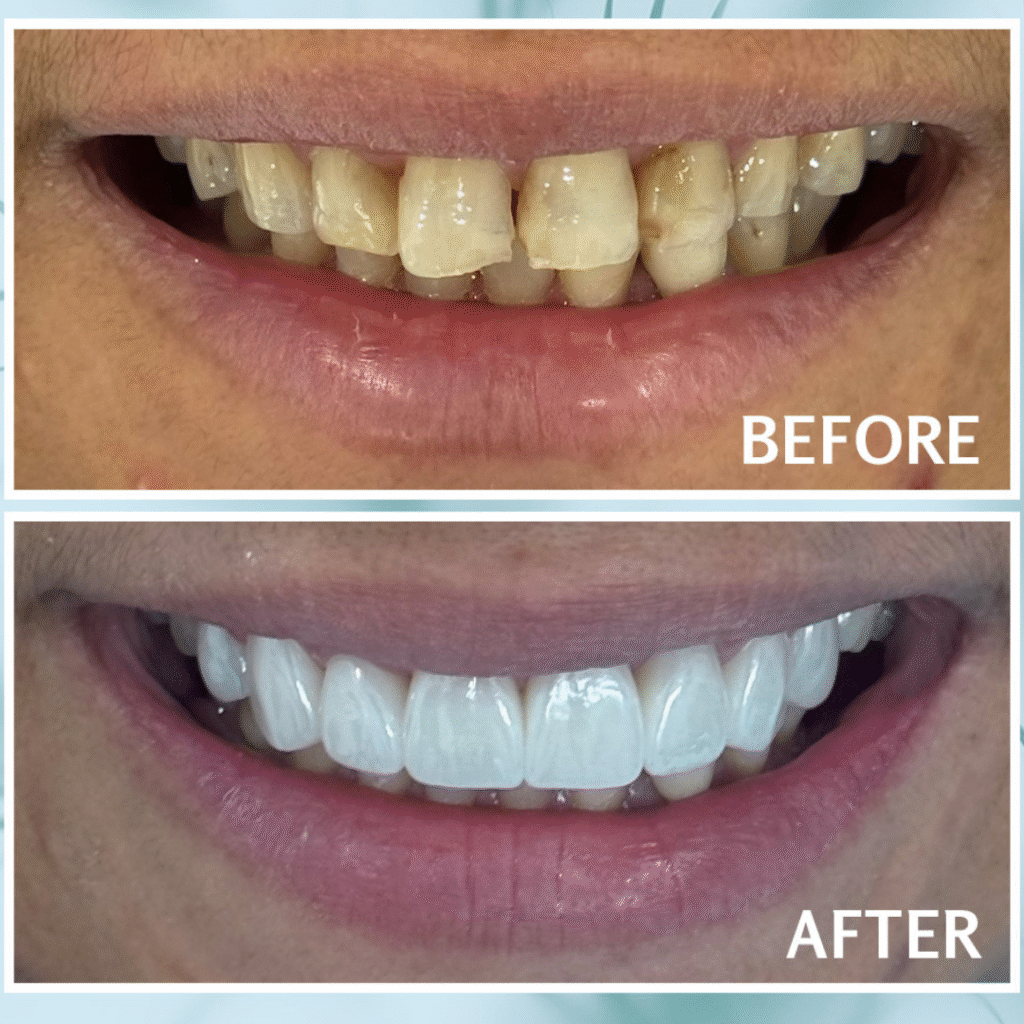
Because braces don’t change the size of your teeth. And that’s the short answer. This patient came in right after finishing orthodontic work. Her teeth were aligned, everything was straight, but she still felt like something was off. Her teeth looked too small for her smile. There were gaps left even after the braces came off. And she told me she felt like she had baby teeth. Like an adolescent smile in an adult face.
That wasn’t a failure of the orthodontics. That was actually planned. The orthodontist and I had already discussed this beforehand. Get the teeth aligned first, then we’d add the veneers to finish the smile properly. Because alignment is only part of the equation.
Ready To Get Started?
Request your appointment at Riverview Dental Art. Discover complete health dentistry!
Call 813.358.4117Request AppointmentWhat Dr. Espino Says About This Case
“This is a great example of a veneer case. A young lady who actually just finished orthodontic work to get her teeth in alignment, but she felt like her teeth were too small. She had a little bit of gaps that were left after ortho was done. And actually was kind of planned that way with the orthodontist because we knew we were going to be doing veneer cases. Her teeth are just generally too small for the size smile that she has. She felt like she’s got baby teeth. And it’s a great veneer case because all we need to do is add ceramic on the front of the teeth to give her a fuller smile, a wider smile, brighten some things up, close some spaces, make sure everything’s symmetrical. Doing it that way with ceramic veneers, very little reductions to her teeth, very, very non-invasive, and we get a very nice outcome.”
Why Braces Alone Don’t Always Finish the Smile
So braces do one thing really well. They move teeth into proper alignment. They straighten things out. Fix rotations. Close major gaps. Correct bite issues. That’s orthodontics. That’s what it’s designed to do.
But braces don’t change the actual size or shape of your teeth. If you have naturally small teeth relative to the size of your mouth and lips, moving those small teeth into alignment doesn’t make them bigger. They’re just straight small teeth now.
And in a lot of cases, that leaves patients feeling like something’s still not right. The alignment is there. But the proportions are off. The smile still looks young or incomplete. That’s what was happening here.
Her teeth were genuinely small for the smile she had. Not abnormally so. Just on the smaller end of the spectrum. And no amount of orthodontics was going to change that. That’s where cosmetic dentistry comes in.
What It Means to Have “Small Teeth” or “Baby Teeth”
When patients say their teeth look like baby teeth, they’re usually describing a proportion issue. The teeth are there, they’re adult teeth, but they’re undersized relative to the person’s face, lips, and overall smile.
Sometimes it’s genetic. Some people just have smaller teeth naturally. Sometimes it’s due to wear or grinding over time that’s made the teeth shorter. And sometimes it’s a combination of both.
What it creates visually is too much gum show, too much space between teeth, or just a general sense that the teeth don’t fill the smile properly. And that feeling, that sense that something’s off, is valid. Because the proportions genuinely are off.
Why This Case Was Planned with the Orthodontist from the Start
This is something I wish more patients understood. When orthodontics and cosmetic dentistry are planned together from the beginning, you get a better result. Not always necessary. But when you know going in that the patient’s going to need veneers after the braces come off, the orthodontist can position the teeth with that in mind.
In this case, the orthodontist left some space. Intentionally. Because we knew I was going to be adding width and fullness with the veneers. If he’d closed every single gap completely, I’d have less room to work with. The teeth would be too tight together. The veneers would end up looking bulky or overdone.
By leaving strategic space, the orthodontics set the stage for the veneers to look natural. That kind of coordination requires communication between the orthodontist and the cosmetic dentist. And when it happens, the final result is so much better than if each person is working in isolation.
How Veneers Add Fullness and Width to a Smile
Veneers are thin layers of ceramic that bond to the front surface of the tooth. And the beauty of them, especially in a case like this, is that they can add size without being invasive.
We’re not cutting the teeth down significantly. We’re just lightly preparing the surface so the veneer can bond properly. And then the veneer itself adds the width, the length, the fullness that was missing. So the tooth goes from small to proportional. From gappy to filled in. From young-looking to balanced.
In her case, that meant giving her a fuller smile. Wider. Teeth that actually filled the space her lips created when she smiled. Closing the gaps left after ortho. Making sure everything was symmetrical and proportional to her face.
And because we’re adding ceramic rather than removing tooth structure, the whole process is conservative. Non-invasive. We’re building up, not cutting down.
Why Minimal Tooth Preparation Matters
One of the questions patients ask me is, how much of my natural tooth are you removing? And that’s a smart question. Because the more natural tooth structure you preserve, the better off you are long-term.
In a case like this, where the teeth are already small and we’re adding fullness, the preparation is minimal. I’m talking about a very thin layer off the front surface. Just enough to create room for the veneer and make sure it bonds properly. That’s it.
Compare that to a case where someone has large teeth and we need to reduce them to create the right proportions. That requires more preparation. More removal. It’s still a veneer, but the process is more invasive.
Here, we’re in the ideal scenario. Small teeth that need to be bigger. Minimal prep. Maximum result. That’s the kind of case where veneers really shine.
Closing Gaps, Brightening Shade, and Creating Symmetry
So what did the veneers actually accomplish in this case? A few specific things.
First, we closed the gaps. The spaces that were left after braces came off. Those weren’t a mistake, they were intentional, but they still needed to be addressed. The veneers filled those spaces naturally.
Second, we brightened the shade. Not dramatically. Just a lift. Something that looks fresh and youthful but still natural. You don’t want veneers that scream “I got veneers.” You want veneers that just make people think you have a great smile.
Third, we made sure everything was symmetrical. When you’re adding width and length to multiple teeth, each one has to be designed in relation to the others. The centrals, the laterals, the canines, they all have to work together as a set. That symmetry is what creates the sense of balance. And that balance is what makes a smile look right.
The Role of Porcelain Veneers in a Post-Orthodontic Smile Makeover
This is a specific type of smile makeover. Post-orthodontic cosmetic dentistry. The teeth are already aligned. The bite is already correct. We’re not fixing structural problems. We’re refining the cosmetic layer.
Porcelain veneers, or ceramic veneers, they’re the right tool for this situation. Because they’re thin, strong, conservative, and they mimic natural enamel incredibly well. The translucency. The way light interacts with the surface. When they’re done right, they look like teeth. Not dental work.
For patients in the Tampa Bay area who’ve finished braces and are still not happy with how their smile looks, this is the conversation we need to have. Braces did their job. Now let’s finish the smile properly with cosmetic dentistry.
Finding a Cosmetic Dentist in Tampa Bay Who Coordinates with Orthodontists
If you’re considering braces or Invisalign and you’re also thinking about veneers down the line, the ideal scenario is finding a cosmetic dentist and an orthodontist who will coordinate that treatment from the start.
We plan cases together. The orthodontist knows what I’m going to do after. I know how they’re positioning the teeth. And the patient gets a cohesive result instead of two separate treatments that don’t quite fit together.
If you’re searching for a smile makeover dentist or a cosmetic dentist who understands how to work within an orthodontic plan, that collaboration is something worth asking about. Because it genuinely affects the final outcome.
Frequently Asked Questions
Q: I just finished braces but my teeth still look small and I have gaps. Did something go wrong with my orthodontic treatment?
Probably not. Braces align teeth and correct bite issues, but they don’t change the actual size of your teeth. If your teeth are naturally on the smaller side, straightening them won’t make them bigger, it just puts them in the right position. Gaps after braces can happen for a couple reasons. Sometimes the orthodontist intentionally leaves space because they know you’re planning to do veneers afterward and they want to give the cosmetic dentist room to work. Other times the teeth are just small relative to the jaw and even perfect alignment leaves some spacing. Either way, it’s not a failure of the orthodontics. It’s just that alignment is only part of creating a complete smile. Veneers can add the fullness and width that’s missing and close those gaps in a really natural-looking way.
Q: If I get veneers after braces, how much of my natural tooth will be removed?
In a case like this one, where we’re adding size to small teeth, the preparation is minimal. We’re talking about removing a very thin layer from the front surface of the tooth, usually less than a millimeter. Just enough to create space for the veneer to bond and sit naturally without looking bulky. Because we’re building the tooth up rather than making it smaller, the amount of natural tooth structure we have to remove is really minimal. That’s one of the advantages of this type of case. It’s about as conservative as veneer work gets. If your teeth were larger and we needed to reduce them to create better proportions, the preparation would be more involved. But for small teeth that need fullness, we’re preserving almost everything.
What to Expect If You’re in a Similar Situation
If you’ve finished braces and you’re still not happy with the size or proportions of your smile, come in and let’s talk about what’s actually bothering you. Is it the size of the teeth? The gaps? The color? All of the above?
From there I’ll look at what we’re working with. How much space we have. What kind of preparation would be needed. And I’ll show you what veneers could realistically accomplish for your specific teeth.
Two appointments. Minimal prep at the first visit, temporary veneers go on. Two weeks later, final veneers are bonded. That’s the process. And for someone who’s already gone through months or years of braces, two weeks to actually finish the smile feels pretty manageable.
Is This the Right Next Step for You?
If you’ve recently finished orthodontic treatment and you’re still feeling like your teeth look small, young, or gappy, veneers might be exactly what you need to complete the transformation. Braces did the alignment. Now let’s handle the proportions.
For patients across Tampa Bay, Riverview, and St. Petersburg who are in this exact situation, this is a conversation we have regularly. Come in. We’ll look at your teeth post-braces and figure out the best path to get your smile to where you actually want it.
View more of our smile transformation cases here.