
Last Updated on March 18, 2026
Do You Really Need to Remove All Your Teeth? Why Most Dentists Don’t Explore Every Option
No. And I want to be clear about that. Because I feel like there’s a growing trend in dentistry right now where patients are being told their teeth can’t be saved. They go in with a damaged smile, an erosion problem, a broken-down bite, and before anyone really digs into what’s still viable, the conversation jumps straight to full mouth implants. Pull everything. Start over. And in my professional opinion, that’s only the right answer when the teeth genuinely cannot be saved. Not before you’ve actually looked.
Ready To Get Started?
Request your appointment at Riverview Dental Art. Discover complete health dentistry!
Call 813.358.4117Request AppointmentWhat Dr. Espino Says About This Case
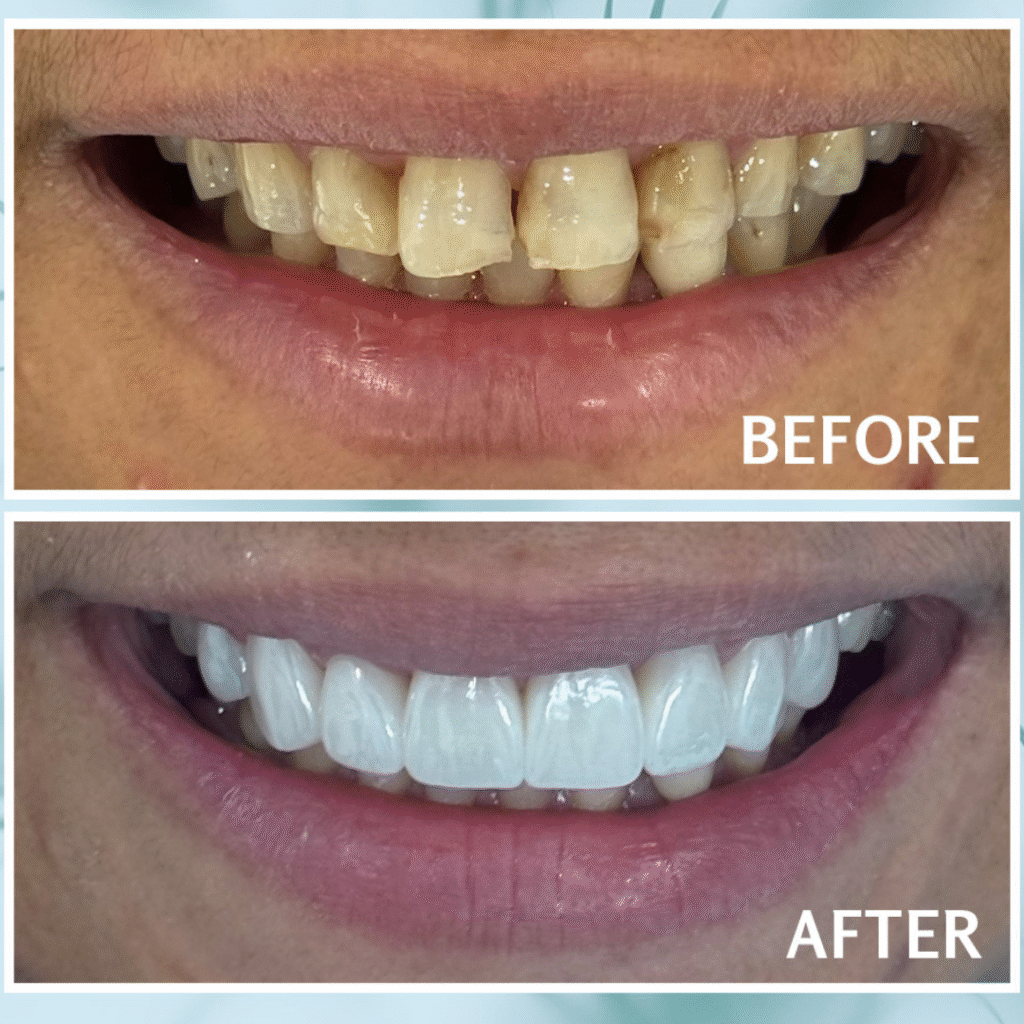
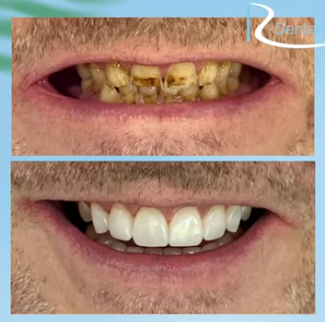
“This is a perfect example of it’s not too late and you do not need to remove all of your teeth to get a beautiful smile. There’s a huge movement in dentistry where somebody doesn’t feel like their teeth are savable. They go to a dentist and the dentist is talking to them about removing all of their teeth and doing a full mouth dental implant case. Professionally, in my opinion, I think that’s only necessary when we can no longer save teeth. And in this case, even though this patient thought there’s no way these teeth can be saved, the teeth themselves are actually very restorable. He did not need to remove his teeth. This was a very comprehensive rehab to fix the bite and to obviously get a better cosmetic result.”
What Was Actually Going On With This Patient’s Teeth
So when I looked at this patient, there was a lot happening. Significant damage. His bite was off. There were erosions. Staining. Discoloration from structural damage to the teeth themselves.
And visually, yeah, it looked bad. I understand why another dentist might look at that and think the teeth are too far gone.
But here’s what you have to ask. Is the damage on the surface of the teeth? Or has the tooth structure itself been destroyed? Because those are two very different situations.
In this case, when I actually evaluated the teeth carefully, the underlying structure was still there. The teeth needed to be resurfaced. Recontoured. The bite needed to be corrected so he’d stop breaking teeth. But the teeth themselves were restorable. That’s a fundamentally different conversation than “pull everything.”
Why So Many Patients Are Told to Remove All Their Teeth
I want to address this directly because I think it’s a real problem. There’s momentum in dentistry right now around full mouth implant cases. And for the right patient, that’s a genuinely good solution. When teeth truly can’t be saved. When bone loss is severe. When we’ve exhausted every other option.
But that’s not every patient. Not even close.
Some of this is about complexity. Saving compromised teeth and rehabilitating a damaged bite is harder than starting from scratch. It requires more planning. More clinical judgment. It takes longer. And honestly, not every practice has the experience or the setup to do that kind of comprehensive work.
So patients end up being steered toward the more straightforward option. Even when a more conservative path was possible.
That bothers me. Because once the teeth are gone, they’re gone.
What a Comprehensive Bite Rehabilitation Actually Involves
This case was what I’d call a full comprehensive rehab. And that means we addressed two things simultaneously. The bite and the cosmetics. You can’t separate them in a case like this.
When the bite is wrong, teeth break. Over and over. The forces aren’t distributed correctly, so certain teeth take more stress than they should. That’s what was happening here. And if we fix the cosmetics without fixing the bite, the new restorations are going to fail the same way the old teeth did.
So the first priority was getting the bite right. Making sure when he closes his teeth together, the forces are balanced. That he’s not going to keep fracturing things.
Then we resurface the enamel. Recountor the teeth. Bring the smile back to something natural and balanced. And do it in a way that holds up long term because the foundation is correct now.
The Role of Enamel Resurfacing in Smile Restoration
Enamel resurfacing is something people don’t always understand. So let me explain what we’re actually doing.
When teeth have been eroded or damaged over time, the surfaces become irregular. Rough. Worn down in ways that affect both function and appearance. The translucency is gone. The natural contours are gone. The teeth look flat and dull.
By resurfacing with ceramic or porcelain, we’re rebuilding those surfaces. Restoring the natural shape and texture of the enamel. Bringing back the light reflection that makes teeth look alive and real.
And when we do that in the context of correcting the bite at the same time, the result isn’t just cosmetic. It’s structural. The new surfaces are designed to work with the correct bite position. So they’re protected. Not just beautiful.
Why This Patient Stopped Smiling — and What Changed
There’s something in this case I have to share. When I took the before photos, I had to actually ask this patient to smile. And the smile he gave me looked forced. Unnatural. Like someone who’s forgotten how to do it.
Because he had. Years of being self-conscious about his teeth. Years of hiding them. You stop smiling without thinking about it. It becomes automatic. You just don’t.
When I delivered the final restorations, something shifted immediately. He started smiling like a normal person. Without being asked. Without forcing it. And you could just see the difference. The confidence that comes from not having to think about your teeth every time you open your mouth.
That’s not a small thing. That’s years of something being given back to a person. And it happened because we found a way to save what was there instead of replacing it with something that wasn’t his.
Cosmetic Dentistry vs Full Mouth Implants: When Each Makes Sense
I want to be fair here. Full mouth implants are genuinely the right answer in some situations. When teeth are too structurally compromised to restore. When bone loss is severe. When the cost and invasiveness of saving individual teeth doesn’t make clinical sense.
But that’s a specific set of circumstances. And it should be reached through a thorough evaluation, not as a default recommendation.
Conservative cosmetic dentistry, comprehensive bite rehabilitation, porcelain veneers, ceramic crowns, these are the right tools when the underlying teeth are still viable. When we can resurface and recountor and correct the bite without removing what’s there.
The question I always ask first is, what can we save? And the answer is often more than the patient expects.
Finding a Cosmetic Dentist in Tampa Bay Who Will Actually Evaluate Your Options
If you’re in the Tampa Bay area and you’ve been told your teeth need to come out, I’d strongly encourage you to get a second opinion before making that decision. Because it is a permanent one.
At Riverview Dental Arts, we see patients from Riverview, St. Petersburg, and across the Tampa Bay area who’ve been given that recommendation. And a meaningful number of them had more options than they were told about.
Whether you’re searching for a smile makeover dentist, a cosmetic dentist with experience in complex rehabilitation cases, or just someone who will take the time to actually look at your situation before recommending the most invasive option, that’s what we do here.
How a Comprehensive Rehab Differs from a Standard Smile Makeover
A standard smile makeover — porcelain veneers, whitening, minor reshaping — is about improving the appearance of teeth that are already in reasonably good shape. Good foundation. Just needs cosmetic refinement.
A comprehensive rehab like this case is different. We’re correcting structural problems. Rebuilding a damaged bite. Addressing erosion and breakdown that’s been accumulating for years. And then making it look good on top of all of that.
It requires more planning. More clinical judgment. More appointments. But the result is a smile that not only looks better but functions correctly. And that’s what protects the restorations long term.
When patients come in searching for a smile makeover near me, sometimes what they actually need is this. A deeper rebuild. And it’s important that the dentist you choose can tell the difference and execute both.
Frequently Asked Questions
Q: I’ve been told my teeth are too damaged to save and I need full mouth implants. How do I know if that’s really true?
Honestly, the only way to know is to have someone actually do a thorough evaluation. Not a quick look, a real clinical assessment. X-rays. Periodontal evaluation. Analysis of the bite. Assessment of what tooth structure remains and whether it’s viable for restoration. In my experience, patients who’ve been told their teeth can’t be saved have more options than they realize more often than not. That doesn’t mean implants are wrong. Sometimes they genuinely are the best path. But that conclusion should come after a careful evaluation, not before one. If you’ve only had one opinion, get another before you commit to removing healthy or restorable teeth. Because once they’re gone, that’s permanent.
Q: What’s the difference between erosion damage and damage that can’t be repaired with veneers or crowns?
Good question. Erosion affects the surface of the tooth. The enamel gets worn down, thinned, sometimes heavily damaged. It looks bad. And it can feel bad, sensitivity, irregular surfaces, teeth that look flat and dull. But if the underlying tooth structure is still there, if the root is sound, if there’s no significant bone loss around the tooth, we can often restore that surface with ceramic or porcelain. We’re essentially rebuilding the enamel layer with a material that mimics it. What makes a tooth unrestorable is when the damage goes so deep that there’s not enough structure left to support a crown, or when there’s significant bone loss around the root that makes the tooth clinically unstable. That’s a different situation. But surface erosion and bite damage, even significant damage, doesn’t automatically mean the tooth has to come out.
What to Expect at a Free Consultation
First thing, we talk. I want to understand what you’ve been told. What your concerns are. What’s been bothering you and for how long.
Then I do a proper evaluation. I’m looking at x-rays. Evaluating the bite. Checking the bone and gums. Looking at each tooth individually to assess what’s restorable and what isn’t.
And then I give you an honest answer. What I actually see. What the options are. What a comprehensive rehabilitation would involve if that’s what the case needs. Or whether a more straightforward smile makeover approach is the right fit.
No pressure. No defaulting to the most dramatic option. Just a real clinical conversation about what makes sense for your specific situation.
Is a Comprehensive Smile Rehabilitation Right for You?
If you’ve been told your teeth can’t be saved, if you’ve been quoted for full mouth implants and something doesn’t sit right, come in and let us take a proper look.
Plenty of cases that seem hopeless at first glance are actually very restorable. This patient is proof of that. Damaged bite, erosion, staining, a smile he’d stopped using years ago. And we saved everything. Corrected the bite. Restored the surfaces. Gave him back a smile that functions and looks like his own teeth.
That’s what we do at Riverview Dental Arts. For patients across Tampa Bay, Riverview, and St. Petersburg. And we’re not going to recommend pulling teeth until we’ve genuinely exhausted every option to save them first.
View more of our smile transformation cases here.