Last Updated on March 10, 2026
Do You Really Need Dentures, or Can We Save Your Smile with Implants and Ceramic Crowns?
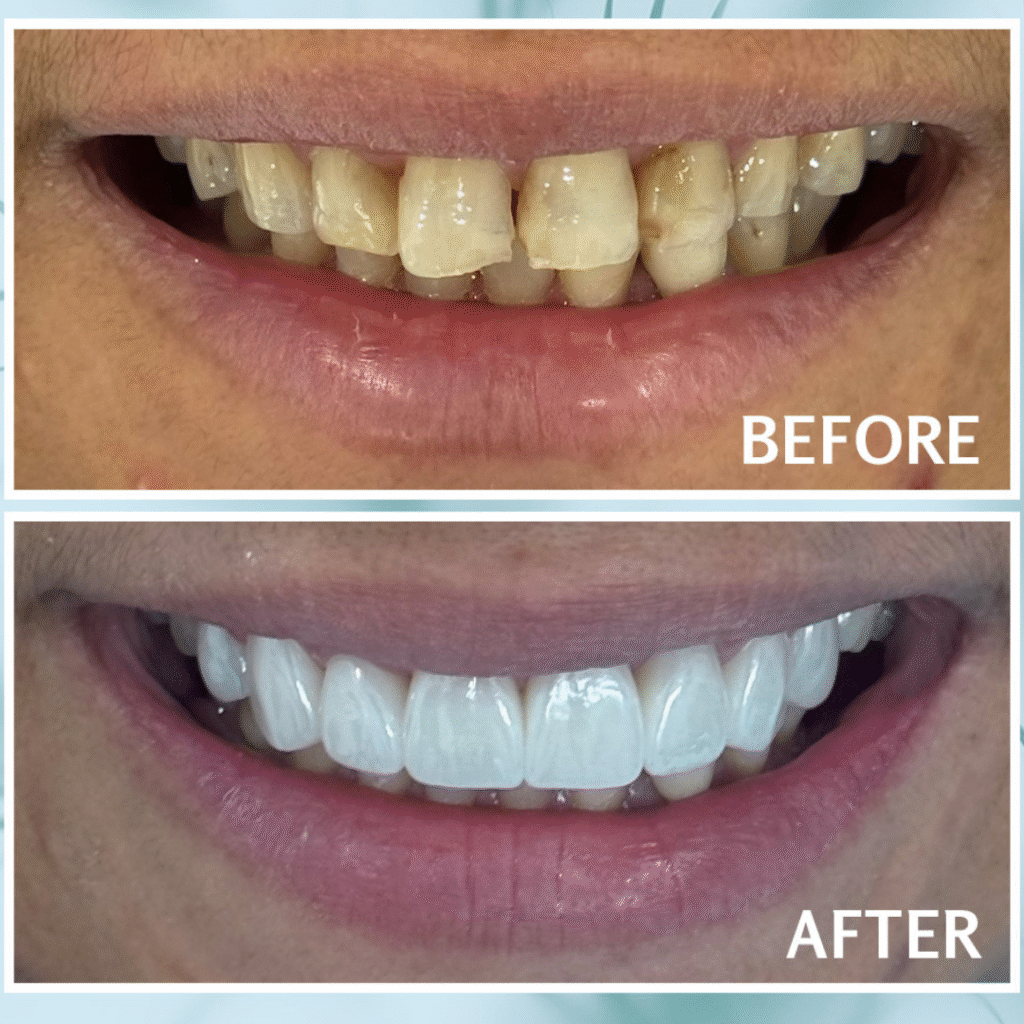
In most cases, the answer is no — you don’t. And I say that having seen this exact situation more times than I can count. Patients come in with just a handful of teeth left, already resigned to dentures, already told by multiple dentists that there’s no other way. And a lot of the time, there is. We can work with what’s left. We can place implants where teeth are missing, put ceramic crowns on what’s still there, and rebuild a fully functional, natural-looking smile — without pulling everything out. That’s exactly what we did for this patient.
Ready To Get Started?
Request your appointment at Riverview Dental Art. Discover complete health dentistry!
Call 813.358.4117Request AppointmentWhat Dr. Espino Says About This Case
“This patient came to see me and only had five teeth left on the top. She just assumed she needed to go into dentures. And I told her, actually, we can work with these teeth. Place implants in the back. She doesn’t have to have all of her teeth pulled. We can make use of the teeth she has left, add some implants, do some ceramic crowns to revamp those teeth, and get a very aesthetic result. But something that is truly functioning. Something that feels like natural teeth. Because they look and feel like natural teeth with implants. And she didn’t have to have extensive surgery to have all of her teeth pulled.”
Why So Many Patients Think Dentures Are Their Only Option
Here’s why this happens. When a patient has lost most of their teeth, a lot of dentists look at what’s left and think it’s easier to just start over. Pull everything. Put in a full denture or full arch implants. Clean slate.
And sometimes that’s the right call. Not always. But sometimes.
But a lot of times, the teeth that are still there are actually usable. They’ve just been written off. The patient walks in thinking they’ve been told the truth. That their remaining teeth are too far gone. And so they accept it.
What I do differently is look at those remaining teeth and ask, what can we actually work with here? What can we save? Because keeping natural teeth, when it’s possible, is almost always better than replacing them.
What We Actually Did in This Case
So she had five teeth left on the top. And some teeth on the bottom too, which you couldn’t see in the video, but they were there.
What we did was work with the teeth she had. We placed implants in the areas where teeth were missing, specifically in the back where function matters most. Then we placed ceramic crowns on the remaining natural teeth to restore their shape, strength, and appearance.
So she ended up with a combination. Natural teeth that were restored. Implants where teeth were gone. And ceramic crowns tying everything together.
The result looks natural. Feels natural. Functions like natural teeth. And she didn’t have to go through extensive surgery of having everything pulled and replaced all at once.
Why Saving Natural Teeth Matters
People ask me sometimes, why does it matter if we save the natural teeth? If we’re going to do implants anyway, why not just do the whole thing?
And the answer is, natural teeth have roots. And those roots do something important. They stimulate the jawbone. Keep it from shrinking. When you lose teeth and don’t replace them, the bone resorbs over time. The jaw changes shape. That’s part of why denture wearers end up with that sunken look over the years.
When you keep natural teeth, even a few of them, you’re preserving bone. You’re preserving structure. And that matters for the long-term health of the mouth.
Beyond that, natural teeth with crowns on them feel different than implants. Not better or worse necessarily. But different. And having a mix of both, with natural roots still in place in some areas, gives the patient something closer to what they were born with.
Dental Implants as Part of a Larger Smile Makeover
I want to be clear about something. This case wasn’t just a functional restoration. It was a full smile makeover.
We weren’t just replacing missing teeth. We were rebuilding the whole smile. Ceramic crowns on the remaining teeth meant we could reshape, brighten, and rebalance everything. The implants filled in the gaps. And the end result was a smile that looked complete. Balanced. Natural.
For patients here in the Tampa Bay area looking for a smile makeover dentist who handles complex cases, this is exactly the kind of work we do. It’s not just about aesthetics. It’s about restoring full function. Long-term stability. A smile the patient can rely on for years.
And this patient walked out with something she didn’t think was possible. A beautiful, functional smile. Without the dentures she’d already resigned herself to.
Implants vs Full Dentures: What’s the Difference for the Patient
So let’s talk about what this actually means day to day. Because that’s what patients really want to know.
Dentures come out. They can slip. They can make it harder to eat certain foods. Over time, as the bone changes, they need to be refitted. And psychologically, a lot of patients struggle with them. It’s a constant reminder that something’s missing.
Implants are fixed. They don’t come out. They function like teeth. You brush them, floss around them, go to your regular checkups. And they don’t shift or slip when you’re eating or talking.
Now, full arch implants, where every tooth is replaced, is a significant surgery. It’s expensive. It’s a long process. And in some cases, it’s absolutely the right answer.
But in this case, it wasn’t necessary. We got to the same outcome, a fully functional, natural-feeling set of teeth, without the extensive surgery. And that’s a big deal.
Why This Approach Isn’t What Most Dentists Offer
I’ll be honest about something. The approach we took here requires more planning. More clinical judgment. More time at the case planning stage to figure out exactly which teeth can be saved, where implants make the most sense, how to design the crowns to work with the implants.
It’s easier, frankly, to just say pull everything and start fresh. One clear treatment plan. Predictable workflow. A lot of practices default to that because it’s simpler to execute.
But it’s not always what’s best for the patient. And at Riverview Dental Arts, we take the time to look at each case individually. Ask what we can preserve. What we can build on. Because the most conservative approach that still gets you a great result is usually the right one.
The Role of Ceramic Crowns in Full Mouth Restoration
Ceramic crowns were a big part of this case. And I think people underestimate how much they contribute to the final result.
We used them on the remaining natural teeth to restore their shape and strength. Old teeth that had been through a lot. Worn down. Maybe some decay. Not pretty. But still structurally viable.
Ceramic mimics natural enamel. The translucency. The way it reflects light. When you put a well-designed ceramic crown on a tooth, it looks like a real tooth. And when you have a full set of them, working together with the implants, the smile looks cohesive. Complete.
That’s the goal in a case like this. Not just to replace what’s missing. But to make the whole thing look and feel like it belongs together.
Cosmetic Dentistry and Function: They’re Not Separate
One thing I want patients to understand is that cosmetic dentistry and functional dentistry aren’t two different things. At least not the way I practice.
When we redesign someone’s smile, we’re not just thinking about how it looks. We’re thinking about how the teeth function together. How the bite works. How the implants and crowns are going to hold up over years of chewing and speaking.
If the function is off, the aesthetics will fail eventually. Crowns will chip. Implants will be under the wrong kind of stress. The whole thing breaks down.
So good cosmetic dentistry is good functional dentistry. They go together. And that’s why cases like this one, where we’re rebuilding a whole mouth, require that level of planning and precision.
Finding a Cosmetic Dentist in Tampa Bay for Complex Cases
If you’re somewhere in the Tampa Bay area and you’ve been told your teeth are hopeless, I’d encourage you to get a second opinion. Not because every dentist is wrong. But because sometimes there are options that haven’t been explored.
At Riverview Dental Arts, we see patients from Riverview, St. Petersburg, and across the Tampa Bay area who’ve been told the same thing this patient was told. And in a lot of those cases, we find a path that preserves more than the patient expected.
Whether you’re looking for a smile makeover near me, a cosmetic dentist who handles full mouth restorations, or just someone who will take the time to look at your specific situation honestly, that’s what we do.
Frequently Asked Questions
Q: I only have a few teeth left and every dentist has told me I need full dentures. Is there really another option?
In a lot of cases, yes. And I say that having seen this situation many times. The answer isn’t always the same. It depends on the condition of the teeth you have left, the bone levels, your overall health. But before you commit to full dentures, it’s worth having someone look at whether those remaining teeth can be worked with. In this case, we had five teeth on the top and were able to build an entire functional smile around them using implants and ceramic crowns. She never had to have all her teeth pulled. That’s not always possible. But it’s worth finding out if it is before making a permanent decision.
Q: What’s the difference between getting implants to support a full denture versus what you did in this case?
That’s a good question and it’s a distinction worth understanding. Implant-supported dentures use implants as anchors, but the denture itself is still a removable appliance. It’s more stable than a traditional denture, but it still comes out. What we did in this case was different. We used implants to replace individual missing teeth in specific areas, and then placed crowns, both on the implants and on the remaining natural teeth, to create a fixed, non-removable result. Nothing comes out. It functions like a real set of teeth. And because we kept the natural teeth that were still viable, we preserved bone and got a more natural feel overall. It’s a more involved treatment to plan, but for the right patient it’s a significantly better outcome.
What to Expect If You’re in a Similar Situation
First thing we do is a thorough evaluation. X-rays. A real look at the bone levels. An honest assessment of which teeth are worth saving and which aren’t.
Then we talk. I’ll tell you exactly what I see. What I think is possible. What the treatment would involve and how long it would take.
If implants and crowns make sense, we plan the whole case before we start anything. Map out where the implants go. Design the crowns. Make sure everything is going to work together functionally and aesthetically.
It’s a process. It takes time. But the result is something that lasts. Something that feels like your own teeth. And something you don’t have to think about every day.
Is This the Right Option for You?
If you’ve been told dentures are your only option, come in and let us take a look. We’ve helped patients here in the Tampa Bay area who were in exactly this situation. Patients who thought they were out of options.
Sometimes dentures really are the answer. I won’t pretend otherwise. But a lot of times there’s a path that preserves more. That restores both function and aesthetics. That gives the patient something closer to natural teeth for the long term.
You won’t know until someone takes the time to actually evaluate your specific situation. And that’s exactly what we do.
View more of our smile transformation cases here.