
Last Updated on September 23, 2026
How a Smile Makeover Reshapes Your Entire Face – Not Just Your Teeth
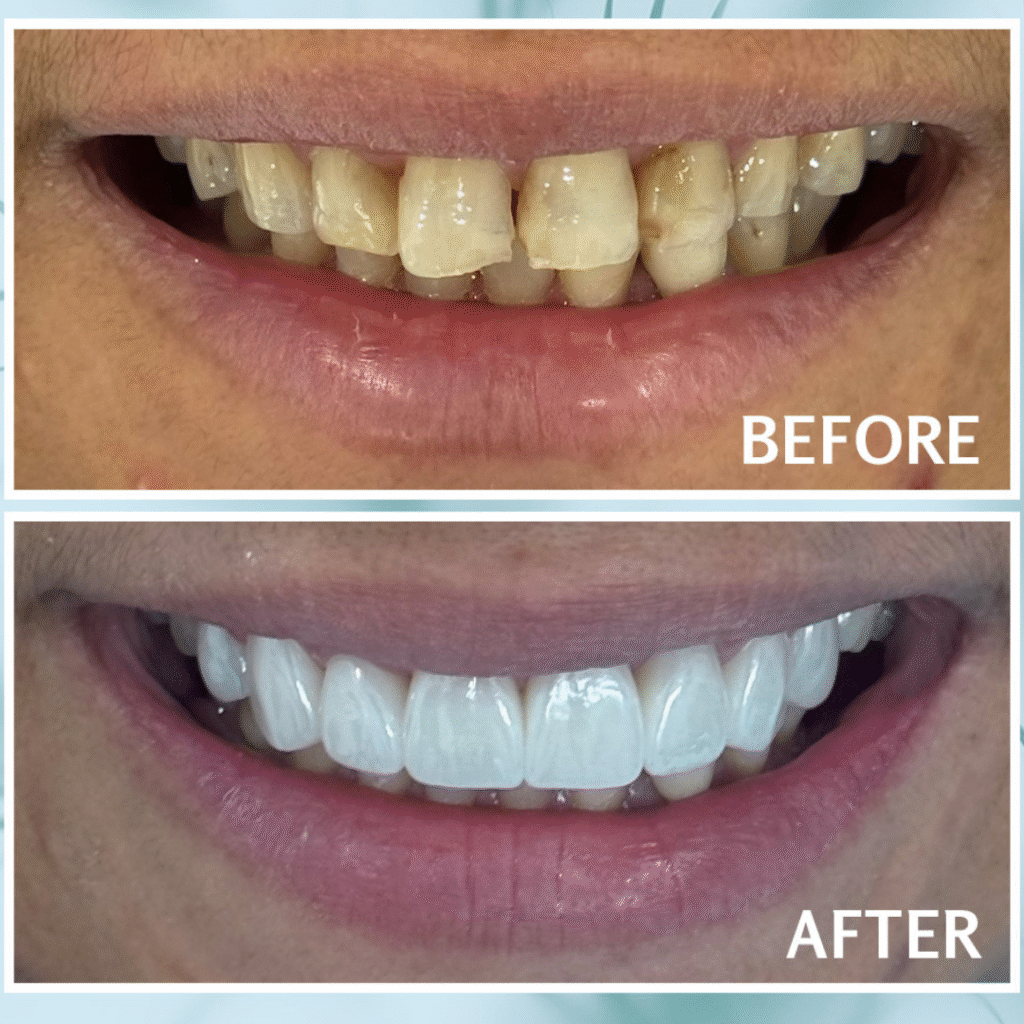
A smile makeover can do more than improve your teeth – it can change your entire facial profile. At Riverview Dental Arts in Riverview, FL, Dr. Derek Espino uses precise ceramic reshaping to correct protruding front teeth, restore natural lip closure, and rebalance the lower third of the face without surgery.
Ready To Get Started?
Request your appointment at Riverview Dental Art. Discover complete health dentistry!
Call 813.358.4117Request Appointment
Why Would a Smile Makeover Change Your Facial Profile?
Answer: The position of your front teeth directly controls where your lips rest. When teeth lean too far forward, the lips follow – creating an unbalanced profile, an open lip posture, and a face that looks pushed forward even at rest.
Most patients come in thinking about their smile. What they don’t realize is that the teeth are the structural framework everything else is built around. Change the teeth, and you change the face.
That’s not a marketing line. That’s anatomy.
When the upper front teeth lean outward – past where they should be sitting – the lips have no choice but to follow. They can’t close naturally over teeth that are pushed too far forward. So the patient compensates. They press their lips together. They hold their chin differently. They avoid certain angles in photos. And over time, that compensated posture becomes the new normal.
What we’re really looking at in cases like this is a functional issue that looks cosmetic on the surface. When you correct the teeth, the lips drop. The profile balances. The lower third of the face resets. That’s a full facial change – achieved with ceramic restorations, not surgery.
What Does a Protruding Front Teeth Case Actually Look Like?
Answer: In a significant protrusion case, the upper front teeth are visibly angled forward in side-profile photos, and the patient often cannot close their lips fully at rest without conscious effort or strain.
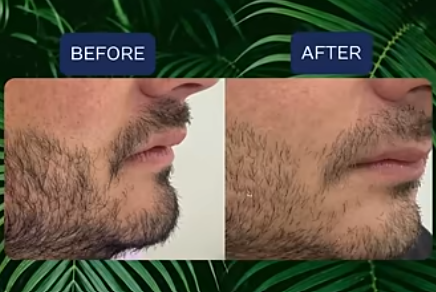
The case Dr. Espino walks through is a clear example of this. Looking at the before photos – both front-facing and in profile – the front teeth were leaning forward significantly. Not subtly. Significantly.
And the functional consequence was real: this patient had the inability to close his lips all the way because the teeth were sticking out so much. Think about what that means day to day. Every photo. Every conversation. Every time he stood in front of a mirror. His resting face – not his smile, just his resting face – was altered by the position of his teeth.
That’s the part patients don’t always connect. They think about the smile. They’re not thinking about what their face looks like when they’re not smiling. And for patients with significant tooth protrusion, the non-smiling profile is often where the issue is most visible.
What Causes Front Teeth to Lean or Protrude Forward?
Answer: Protruding front teeth are most commonly caused by genetics, dental crowding that pushes teeth outward, prolonged childhood habits like thumb-sucking or tongue thrusting, or previous dental restorations built without consideration for overall bite and facial alignment.
It’s worth going through these because the cause influences the approach – and it affects whether ceramics alone are the right path or whether something structural needs to be addressed first.
- Genetics and jaw structure – Some patients are simply born with an upper jaw relationship that angles the front teeth forward. In growing patients, orthodontics can address this at a skeletal level. In adults, ceramic reshaping is often the faster and less invasive path to the same result.
- Crowding – When the arch doesn’t have enough room, front teeth get pushed forward as the path of least resistance. The crowding may not be dramatic, but the protrusion it creates is visible – and functional.
- Childhood habits – Prolonged thumb-sucking or tongue-thrusting during development can push the front teeth forward over time. Most adults with this history don’t connect those habits to what they’re seeing now.
- Old restorations not built for the profile – This one comes up constantly. Crowns or restorations were placed at some point to address a broken tooth or decay – but no one considered how the final position of that restoration would affect the lip, the bite, or the face. You solve one problem without realizing you’ve created another.
How Does Ceramic Reshaping Actually Fix Protruding Teeth?
Answer: Ceramic veneers and crowns fix protruding teeth by precisely recontouring the front surface and angle of the tooth, moving the visible tooth structure back into proper position. The lips follow the corrected tooth position – producing natural lip closure and a more balanced facial profile.
So here’s how the treatment actually works – because it’s not what most people expect.
We’re not extracting teeth. We’re not doing jaw surgery. What we’re doing is using ceramic restorations to recontour and reposition the front tooth surface – reducing the outward angle, bringing the visible structure back, and rebuilding with ceramic designed to sit exactly where it needs to be.
The result in this case: the lip was now able to come down and close naturally without sticking out. That’s the direct mechanical outcome of repositioning the teeth. The lip no longer has forward tooth structure to conform around. It drops. It closes. The face rebalances.
And from a cosmetic standpoint, the change goes further than just lip position. The entire lower third of the face looks different. More proportionate. Less crowded. The kind of change people notice without being able to name exactly what shifted.
That’s what a well-planned smile makeover does that whitening, bonding, or a simple cleaning can’t. It’s structural. And when the structure changes, the face changes with it.
Veneers vs. Crowns: Which Is Right for This Type of Case?
Answer: Both ceramic veneers and ceramic crowns can correct protruding front teeth. The choice depends on the structural condition of each individual tooth – veneers work well when the tooth underneath is healthy; crowns provide more coverage when there’s existing damage, wear, or an old restoration to replace.
Patients often come in with a preference already formed – “I want veneers” or “I’ve heard crowns are better.” The honest answer is that for cases like this, the material outcome can look identical. What changes is how much tooth structure needs to be involved.
| Factor | Porcelain Veneers | Ceramic Crowns |
| Coverage | Front surface only | Full tooth cap |
| Tooth reduction needed | Minimal | More significant |
| Best suited for | Healthy tooth with cosmetic goals | Damaged, worn, or previously restored tooth |
| Can correct protrusion? | Yes | Yes |
| Cosmetic outcome | Identical when done correctly | Identical when done correctly |
In many full-arch cases we use both – crowns where individual teeth need more structural support, veneers where they don’t. Every case at Riverview Dental Arts is custom-designed based on what each tooth actually needs. There’s no template. That’s part of what the free consultation is for.
See more about each option on the veneers page and ceramic crowns page, or browse the before and after gallery for real patient results.
What Does a Smile Makeover for Protruding Teeth Cost in Tampa Bay?
Answer: At Riverview Dental Arts in Riverview, FL, ceramic veneers and crowns are $500 per tooth with a minimum of six teeth. Most Tampa Bay cosmetic practices charge $1,200 or more per tooth for comparable ceramic work – a difference that comes from Riverview Dental Arts fabricating every restoration in-house rather than outsourcing to an external lab.
Cost is almost always the first question patients ask – and it’s a fair one. Let me be direct about the numbers.
| Scope | Teeth | At Riverview Dental Arts | Tampa Bay Average |
| Minimum case | 6 teeth | $2,995 | $7,200–$12,000 |
| Upper arch | 8 teeth | $4,000 | $9,600–$16,000 |
| Upper + lower | 12 teeth | $6,000 | $14,400–$24,000 |
| Full aesthetic zone | 16 teeth | $8,000 | Up to $20,000+ |
| Consultation | — | Free | $75–$200+ |
The reason the price is lower here isn’t lower quality. It’s the in-house lab. Most practices outsource ceramic fabrication to external dental labs and pass that markup to the patient. Dr. Espino designs and crafts every veneer and crown in-house – eliminating the third-party fee entirely, with full control over every detail of the final restoration.
Insurance coverage for purely cosmetic treatment is typically limited. However, if any of the teeth involved have structural issues – fractures, failing restorations, or decay – those components may qualify for partial coverage depending on your plan. Riverview Dental Arts is an in-network PPO provider for most major insurances. Exams and X-rays at the consultation can be billed to your insurance when applicable. See full pricing and financing details on the cost and financing page.
Who Is a Good Candidate for Smile Makeover Reshaping?
Answer: Adults with protruding front teeth, open lip posture, visibly unbalanced facial profiles, or teeth that lean forward in side-profile photos are strong candidates for ceramic reshaping – particularly when they want lasting results without multi-year orthodontic treatment.
The cases that respond best to this approach tend to share a few consistent features. Strong candidates usually present with:
- Front teeth that visibly angle forward or protrude in side-profile photos
- Difficulty closing the lips at rest without conscious effort or strain
- A facial profile that looks pushed forward or unbalanced at the lower third
- Interest in a lasting structural fix rather than a surface-level cosmetic patch
- Healthy underlying teeth and gums – no active decay or untreated gum disease
Cases where I’d want to look more carefully first: significant skeletal jaw discrepancies sometimes need orthodontic or surgical evaluation before ceramic work makes sense – ceramic reshaping is powerful, but it has limits when the bone structure itself is the primary driver. Active grinding (bruxism) also needs to be managed, because uncontrolled grinding works against ceramic restorations over time. Neither situation is a permanent barrier. They’re just things we sequence correctly.
With 15+ years of clinical experience and custom treatment planning that evaluates bite, gum balance, and facial harmony for every case, the goal at every consultation is a result that improves both how the smile looks and how the whole face presents.
One thing worth saying clearly: tooth protrusion tends to compound over time. The surrounding bite adjusts around it. Adjacent teeth wear unevenly. The lip posture becomes more pronounced. What starts as one visible issue becomes a cluster of structural concerns. Early evaluation doesn’t mean rushing into treatment – it means understanding your options while the approach is still straightforward.
If you’ve been looking at profile photos and wondering whether something can actually change – it often can. Patients from across the Tampa Bay area, including Riverview, Brandon, Valrico, and Apollo Beach, come to Riverview Dental Arts for exactly these types of cases. Consultations are free, low-pressure, and honest. We’ll look at what’s actually happening, show you what’s realistically achievable, and let you make the decision from there.
Book your free smile consultation at Riverview Dental Arts here.
Frequently Asked Questions
Can veneers fix teeth that stick out or lean forward?
Yes. Ceramic veneers and crowns can recontour and reposition the visible surface of protruding front teeth, bringing them back into proper alignment. When done correctly, the result includes natural lip closure, a more balanced side profile, and a smile that integrates with the full face rather than dominating it.
How much does smile makeover treatment for protruding teeth cost in Tampa Bay?
At Riverview Dental Arts in Riverview, FL, ceramic restorations are $500 per tooth with a minimum of six teeth. A six-tooth case runs $2,995. A full upper arch case runs $4,000. Most Tampa Bay practices charge $1,200 or more per tooth for comparable work. Consultations are always free.
Will the result look natural, or will people be able to tell?
When ceramic is designed with proper shade, translucency, surface texture, and proportional calibration, the restorations are indistinguishable from natural teeth. The standard at Riverview Dental Arts is work realistic enough that other dentists can’t identify the treated teeth from the natural ones.
Is ceramic reshaping better than braces for protruding teeth?
For adults with mild to moderate protrusion – especially when teeth also need restoration – ceramic veneers and crowns typically achieve equivalent cosmetic and functional results in weeks rather than years. For severe skeletal jaw cases, orthodontic evaluation may be needed first. The right answer depends on what’s actually driving the protrusion, which is what the consultation determines.